Accelerating Cloud Transformation with AWS: A Strategic Guide for Business Success
The enterprise technology landscape reached an inflection point in 2025. Organizations that spent years debating cloud strategies are now asking a different question: how fast can we migrate? This shift reflects a fundamental change in how business leaders view cloud adoption. What once seemed like an optional IT upgrade has become a competitive necessity.
For organizations serious about cloud migration and transformation, understanding AWS's strategic value extends beyond simple infrastructure hosting. The platform represents a complete digital transformation enabler.
AWS commands 30% of the global cloud infrastructure market as of Q2 2025, maintaining its position as the clear market leader despite intensifying competition. The numbers tell a compelling story. The cloud computing market reached $855.7 billion in 2025, growing at an 18.91% CAGR with projections pointing toward $947.3 billion by 2026. More striking is the adoption velocity: 94% of enterprises worldwide now use cloud computing, with 72% of all global workloads hosted in the cloud compared to just 66% the previous year.
Organizations moving to AWS see measurable improvements across every operational metric. Companies report up to 40% reduction in total cost of ownership when migrating business operations to AWS, with these savings compounding over time. The transformation extends beyond cost reduction. AWS-certified engineers earn 25-30% more than their non-certified counterparts, making cloud skills a clear career accelerator while legacy system expertise becomes increasingly scarce.
The strategic value of AWS lies in its comprehensive ecosystem. With over 200 fully-featured services spanning compute, storage, databases, analytics, machine learning, and security, AWS provides enterprises with the tools to build virtually any application at any scale. This breadth matters because modern digital transformation requires integration across multiple technology domains simultaneously.
Strategic Migration Planning for Sustainable Success
Successful AWS migrations follow a structured methodology that balances speed with risk management. Research shows that phased migration approaches achieve 40% less downtime than unplanned migrations, while organizations with strong executive sponsorship achieve 40% higher success rates across all organization sizes. Understanding these migration challenges and developing strategies to overcome them proves essential for seamless transition.
The migration journey begins with comprehensive workload assessment. Organizations need complete visibility into application dependencies, data flows, compliance requirements, and performance baselines before moving the first workload. This discovery phase prevents the costly mistakes that derail unprepared migrations.
AWS provides native tools that accelerate this assessment. AWS Application Discovery Service maps on-premises dependencies automatically, revealing which applications are cloud-ready and which require remediation. For organizations managing thousands of servers, AWS Migration Hub provides centralized tracking and visibility across the entire migration portfolio.
Migration strategies follow the seven R's framework: Rehost (lift-and-shift), Replatform (lift-tinker-and-shift), Refactor (re-architect), Repurchase (move to SaaS), Retire (decommission), Retain (keep on-premises), and Relocate (move to AWS without changes). Each workload requires individual evaluation to determine the optimal approach based on business value, technical complexity, and modernization goals.
Quick wins matter in maintaining momentum. Most successful migrations begin with non-critical applications to validate the process, train teams, and build confidence before tackling business-critical systems. This phased approach reduces risk while demonstrating value early.
The human element proves as critical as the technical one. Change management and skills development must start on day one, not after migration completes. Organizations that treat cloud adoption as a business transformation program rather than an IT infrastructure project consistently outperform those focused purely on technical execution. Integrating DevOps practices and automation throughout the migration process accelerates delivery while reducing risk.
Cost Optimization Through FinOps Discipline
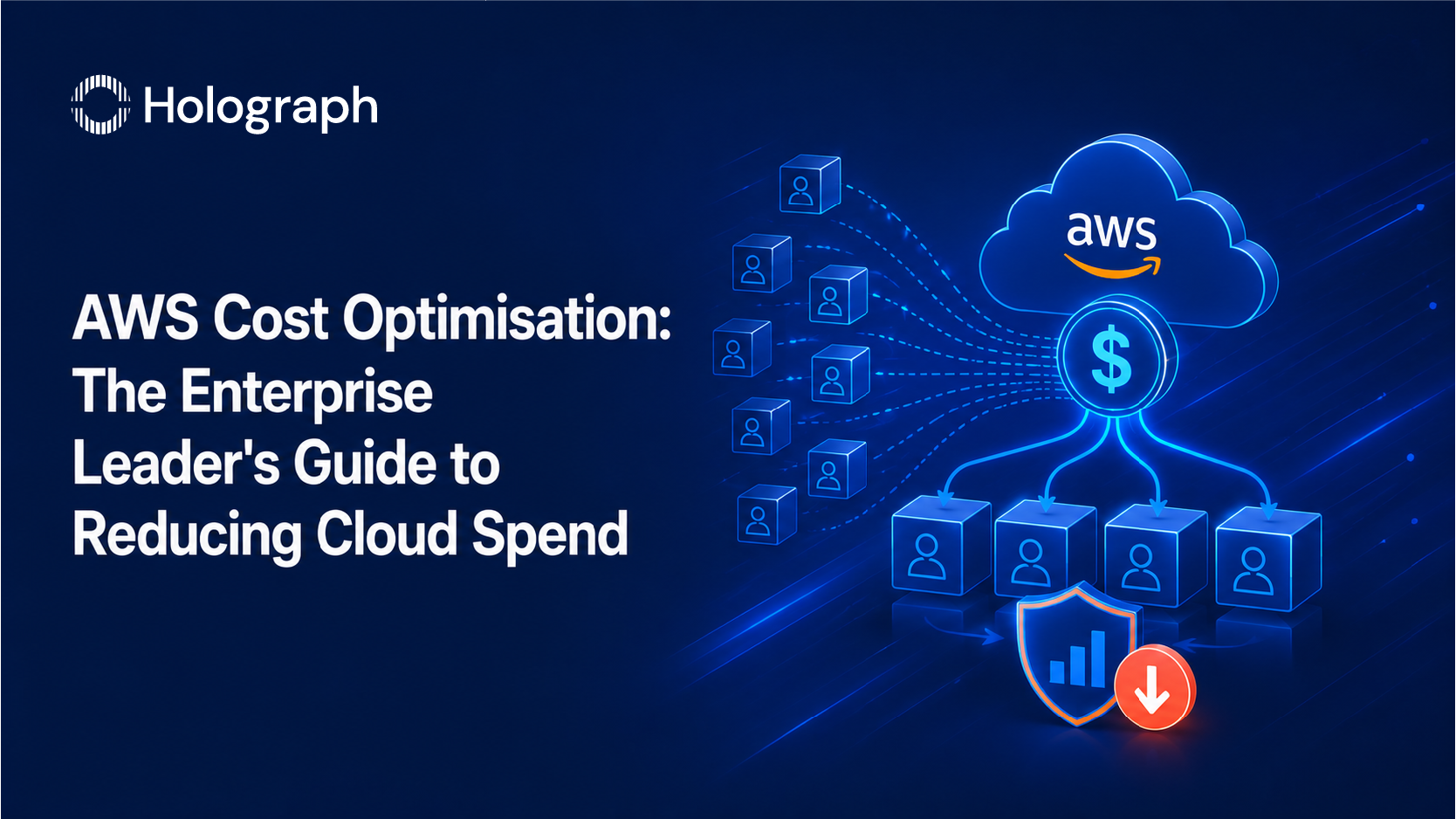
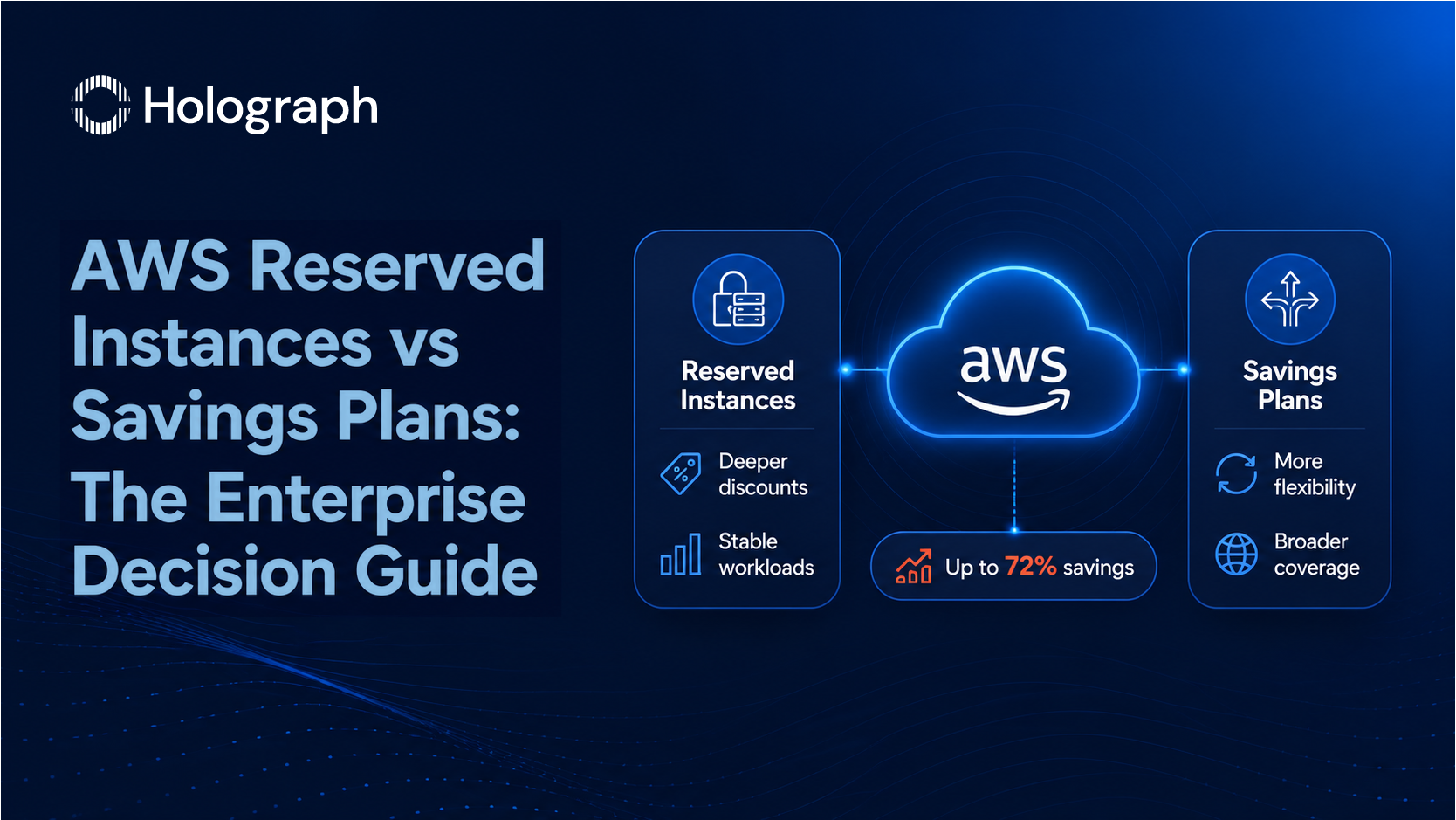
Moving to AWS creates opportunities for significant cost reduction, but realizing these savings requires disciplined financial operations. Right-sizing alone eliminates 20-30% waste in typical cloud deployments, while Reserved Instances deliver 30-40% savings depending on commitment length. Implementing comprehensive cost optimization strategies becomes critical for maximizing cloud ROI in 2026.
FinOps adoption has grown 40% year-over-year and represents a fundamental shift in how organizations manage cloud spending. This practice combines technology, process, and culture to maximize the business value of cloud while managing costs. Mature FinOps teams demonstrate 20-25% annual cost savings through continuous optimization.
AWS provides sophisticated tools for cost visibility and control. AWS Cost Explorer analyzes spending patterns and identifies optimization opportunities, typically finding $15-20 in potential savings per $100 spent. AWS Trusted Advisor provides real-time guidance on cost optimization, security, fault tolerance, and performance improvements.
The most impactful optimizations come from architectural decisions. Serverless computing eliminates idle resource costs by charging only for actual compute time. AWS Lambda, for example, bills by the millisecond with no charges for idle time. For workloads with variable demand, this pricing model dramatically reduces costs compared to always-on servers.
Spot Instances offer another powerful optimization lever. These instances use spare AWS capacity at discounts of 70-90% compared to On-Demand prices. For fault-tolerant workloads like batch processing, containerized applications, and stateless services, Spot Instances deliver enterprise-grade compute at a fraction of traditional costs.
Storage optimization requires attention to data lifecycle management. AWS offers multiple storage tiers, from high-performance SSD storage to archival services like Amazon S3 Glacier. Automated lifecycle policies move data to appropriate tiers based on access patterns, ensuring you pay only for the performance level each dataset requires.
Cost allocation and showback capabilities make cloud spending transparent across business units. Organizations can tag resources by department, project, or cost center, enabling accurate charge-back and driving accountability for cloud spending decisions.
Unlocking Innovation with Advanced AWS Services
Cloud migration opens doors to capabilities that would be prohibitively expensive to build and maintain on-premises. AWS invests heavily in emerging technologies, democratizing access to artificial intelligence, machine learning, serverless computing, and data analytics at scales previously available only to the largest technology companies. Organizations can unlock business innovation through AWS advanced services including AI, serverless architectures, and DevOps enablement.
AI and ML service adoption is growing at 50% year-over-year, with 60%+ enterprise adoption expected by 2026. AWS provides a comprehensive AI/ML stack from fully-managed services like Amazon SageMaker for custom model development to pre-trained AI services for common use cases like image recognition, natural language processing, and forecasting.
Amazon Bedrock represents the latest evolution in generative AI accessibility. This fully managed service provides access to foundation models from leading AI companies through a single API. Organizations can customize these models with their own data while maintaining privacy and security controls.
Serverless computing fundamentally changes how organizations build and run applications. AWS Lambda executes code in response to events without requiring server management, automatic scaling from zero to thousands of concurrent executions in seconds. This operational model eliminates infrastructure overhead while ensuring applications automatically scale to demand.
Containerization through Amazon Elastic Kubernetes Service (EKS) and Amazon Elastic Container Service (ECS) provides deployment flexibility and consistency across environments. These services handle the complexity of container orchestration while integrating with AWS security, networking, and observability services.
Data analytics capabilities transform how organizations extract value from information assets. Amazon Redshift delivers petabyte-scale data warehousing with millisecond query performance. Amazon Athena enables SQL queries directly against data in Amazon S3 without loading into databases. Amazon QuickSight provides business intelligence and visualization with machine learning-powered insights built in.
These advanced services share common characteristics: managed operations, pay-as-you-go pricing, integration with existing AWS services, and continuous innovation without customer intervention. Organizations leverage these capabilities to build products and services impossible with on-premises infrastructure.
Security and Compliance in Cloud Environments
Security concerns historically topped the list of barriers to cloud adoption. That narrative has reversed. 94% of businesses using public cloud report improved security after migration, while 72% of IT leaders say cloud adoption has significantly improved disaster recovery strategies. Organizations implementing AWS security best practices for enterprise cloud environments can achieve robust protection while maintaining compliance.
AWS operates under a shared responsibility model. AWS secures the infrastructure running cloud services, including hardware, software, networking, and facilities. Customers secure their data, applications, operating systems, network configuration, and access management. This division clarifies responsibilities and enables both parties to focus on their areas of expertise.
The breadth of AWS security services addresses enterprise requirements comprehensively. AWS Identity and Access Management (IAM) provides granular control over who can access which resources under what conditions. AWS CloudTrail logs all API calls for compliance and forensic analysis. Amazon GuardDuty uses machine learning to detect threats continuously.
Encryption capabilities cover data at rest and in transit. AWS Key Management Service (KMS) simplifies creation and control of encryption keys with integration across AWS services. For organizations requiring additional control, AWS CloudHSM provides dedicated hardware security modules within AWS infrastructure.
Compliance programs span a remarkable range of frameworks and regulations. AWS maintains certifications for SOC 1/2/3, PCI DSS, HIPAA/HITECH, FedRAMP, GDPR, and dozens of industry-specific and regional compliance programs. This certification infrastructure dramatically reduces the compliance burden for AWS customers. Implementing AWS governance and compliance frameworks ensures risk management and regulatory alignment across your cloud environment.
The AWS Well-Architected Framework provides guidance on building secure, high-performing, resilient, and efficient infrastructure. The security pillar covers identity and access management, detection, infrastructure protection, data protection, and incident response. Organizations can use the AWS Well-Architected Tool to assess workloads against best practices. For comprehensive security implementation, professional IT consulting services help enterprises navigate compliance requirements while building robust security architectures.
Building Resilience Through AWS Architecture
Business continuity planning takes on new dimensions in cloud environments. AWS infrastructure enables resilience patterns impossible with traditional data centers. The global infrastructure spans 114 availability zones within 36 geographic regions, allowing organizations to architect for failure scenarios that would cripple on-premises deployments. Architecting disaster recovery and business continuity on AWS delivers resilient cloud infrastructure that ensures operational continuity.
Availability Zones represent physically separate data centers within a region, each with independent power, cooling, and networking. Applications designed across multiple Availability Zones withstand data center failures without customer impact. This multi-AZ pattern forms the foundation of highly available AWS architectures.
AWS provides managed disaster recovery capabilities that automate much of the complexity traditionally associated with business continuity. AWS Backup provides centralized backup management across AWS services with retention policies, encryption, and access controls built in. CloudEndure Disaster Recovery replicates applications continuously to AWS, enabling recovery point objectives measured in seconds and recovery time objectives of minutes.
Database resilience receives special attention through managed database services. Amazon RDS automates backups, software patching, monitoring, and failure detection with automatic failover to standby replicas. Amazon Aurora takes this further with storage that replicates six copies of data across three Availability Zones with continuous backup to Amazon S3.
For applications requiring global scale and resilience, AWS provides multiple options. Amazon Route 53 offers DNS-based routing with health checks and automatic failover between regions. AWS Global Accelerator uses the AWS global network to route traffic to optimal endpoints based on health, geography, and routing policies.
Testing resilience becomes practical with AWS. Services like AWS Fault Injection Simulator enable chaos engineering by deliberately introducing failures to validate recovery procedures and identify weaknesses. This proactive approach builds confidence in resilience before real failures occur.
Partnering for Cloud Transformation Success
While AWS provides the technology foundation, successful transformations require expertise in assessment, migration, modernization, and optimization. This reality creates opportunities for AWS partners specializing in enterprise cloud transformation.
Holograph brings 15+ years of experience and 170+ successful enterprise implementations across three continents. As an AWS partner, we combine deep technical expertise with proven methodologies that accelerate transformation while managing risk. Our approach addresses the full lifecycle from initial assessment through migration execution and ongoing optimization. Beyond cloud services, our Atlassian expertise helps enterprises build integrated collaboration platforms that support cloud-native workflows.
Cloud transformation represents more than technology change. It requires organizational alignment, skills development, process evolution, and cultural adaptation. Partners who understand both technical and organizational dimensions deliver superior outcomes compared to purely technical implementation approaches.
The velocity of AWS innovation requires continuous learning and adaptation. AWS releases thousands of new features annually. Partners maintain current expertise across the broad AWS portfolio and bring that knowledge to customer engagements, preventing organizations from falling behind on capabilities that could provide competitive advantage.
Conclusion
AWS cloud transformation has moved from strategic option to business imperative. Organizations that delay migration watch competitors ship faster, spend less, and innovate more. The data demonstrates clear advantages: 40% cost savings, 30-40% faster time-to-market, dramatically improved security, and access to capabilities impossible with on-premises infrastructure.
Success requires more than technology migration. It demands strategic planning, executive sponsorship, skills development, cultural change, and continuous optimization. Organizations that approach cloud as business transformation rather than IT project consistently outperform those focused purely on technical execution. Enhancing cloud operations through AWS automation and orchestration with serverless workflows and AI-driven automation accelerates operational maturity.
The opportunity in 2026 is unprecedented. AWS continues expanding its service portfolio, global infrastructure, and partner ecosystem. Organizations beginning their cloud journey today benefit from matured services, proven patterns, and extensive expertise unavailable in earlier cloud generations.
For enterprise leaders evaluating cloud strategies, the question has shifted from whether to migrate to how fast migration can occur while maintaining business continuity and maximizing value. AWS provides the technology foundation. Strategic partners provide the expertise and methodology that accelerate transformation while managing risk.
AEO Questions for Voice Search Optimization
1. How can enterprises accelerate cloud transformation in 2026? Enterprises can accelerate cloud transformation by following a phased migration approach with strong executive sponsorship, which research shows achieves 40% less downtime and 40% higher success rates. Start with comprehensive workload assessment using AWS Application Discovery Service, prioritize quick wins with non-critical applications, and treat the initiative as business transformation rather than purely an IT project.
2. What is the strategic ROI of AWS cloud migration for large organizations? AWS cloud migration delivers up to 40% reduction in total cost of ownership, 30-40% faster time-to-market, and 94% of businesses report improved security. Organizations also achieve 20-30% waste elimination through right-sizing and 30-40% savings through Reserved Instances. The ROI compounds over time through improved operational efficiency, access to advanced technologies, and reduced technical debt.
3. How do successful companies build cloud-first strategies in 2026? Successful cloud-first strategies begin with clear business objectives tied to measurable outcomes like cost reduction, innovation acceleration, or improved resilience. Companies conduct thorough TCO analysis, develop phased roadmaps prioritized by business value, invest in skills development early, and implement FinOps practices for continuous cost optimization. The most successful organizations align migration with broader digital transformation goals and ensure executive sponsorship throughout the journey.
4. Why is 2026 a critical year for AWS cloud migration? 2026 represents a cloud maturity inflection point where 94% of enterprises use cloud computing and 72% of workloads are cloud-hosted. Organizations delaying migration face widening competitive gaps as cloud-native competitors leverage AI, advanced analytics, and operational efficiencies impossible with legacy infrastructure. The convergence of mature AWS services, proven migration patterns, extensive partner expertise, and accelerating AI adoption makes 2026 an optimal window for transformation.