AWS Account Consolidation: How Multi-Account Governance Cuts Cloud Costs
Most large enterprises do not plan to end up with dozens of AWS accounts. The proliferation happens organically. An engineering team provisions a separate account for a new project. A business unit wants its own billing. An acquisition arrives with its own AWS organisation. A compliance team requests an isolated environment for regulated workloads. Each decision makes sense in isolation. The cumulative effect, examined three or four years later, is an AWS estate where the organisation's total purchasing power is split across accounts that each pay full price for services the consolidated entity could be discounting.
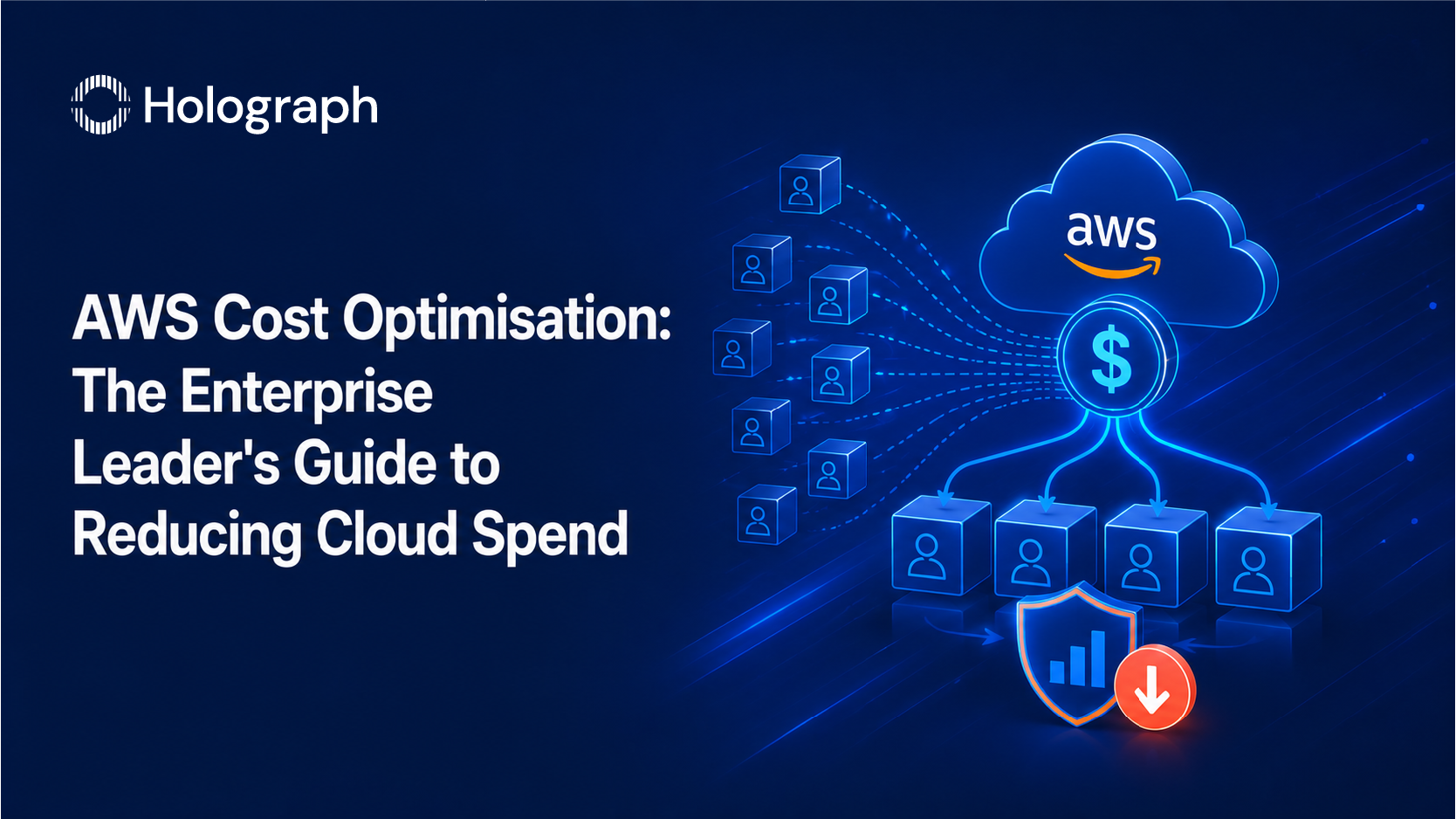
The financial impact is direct and recoverable. Enterprises that consolidate multiple AWS accounts into a single AWS Organization consistently reduce cloud spend through three mechanisms: pooling usage for volume discounts, sharing Reserved Instance and Savings Plan coverage across accounts, and eliminating duplicate fixed costs. For the full four-lever AWS cost reduction framework, see AWS Cost Optimisation: The Enterprise Leader's Guide to Reducing Cloud Spend.
Why Enterprises End Up With Too Many AWS Accounts
Account proliferation follows identifiable patterns, and recognising them is the first step to containing the cost.
The most common driver is team autonomy applied without central account governance. Engineering teams provisioning accounts for new projects operate on a reasonable instinct: separate accounts provide billing clarity, permission isolation, and reduced blast radius for configuration errors. Applied consistently across dozens of teams over several years, that instinct creates a portfolio of accounts that each pay separately for services the organisation could pool. The instinct is not wrong; the absence of a governing framework that balances it is the problem.
Mergers and acquisitions add a second layer. An acquired company arrives with its own AWS organisation, its own billing relationships, and its own enterprise agreement terms. Integrating two separate AWS organisations takes sustained legal, financial, and technical effort. Most enterprises defer that work indefinitely, running parallel environments long after the business integration is otherwise complete.
Environment separation multiplies the total further. Production, staging, development, and testing accounts per workload, per team, per region can turn a starting set of ten accounts into fifty or more within two to three years. At no point does any individual team's account count look unreasonable. The aggregate view across the organisation is rarely examined until a cost reduction programme forces the question.
The True Cost of Account Sprawl
Account sprawl raises costs through three mechanisms, each operating independently of the others.
Fragmented volume discounts. AWS pricing tiers apply to usage aggregated within a single consolidated billing organisation. An enterprise spending $400,000 per month across 20 separate payer accounts receives pricing as 20 smaller customers. Consolidated into a single organisation, that same spend qualifies at a higher volume tier across every account. AWS's own documentation confirms the mechanism: consolidated billing combines usage across all accounts in the organisation, sharing the volume pricing discounts, Reserved Instance discounts, and Savings Plan benefits.
Duplicate fixed costs. Each separate AWS payer account typically carries its own AWS Support contract. Business Support alone costs 10 per cent of monthly AWS spend up to a threshold. Enterprise Support contracts are substantially more. An organisation operating five independent payer accounts across business units pays enterprise support fees five times over, once per account, for what is effectively a single enterprise relationship with AWS. Consolidation into one organisation requires one support contract.
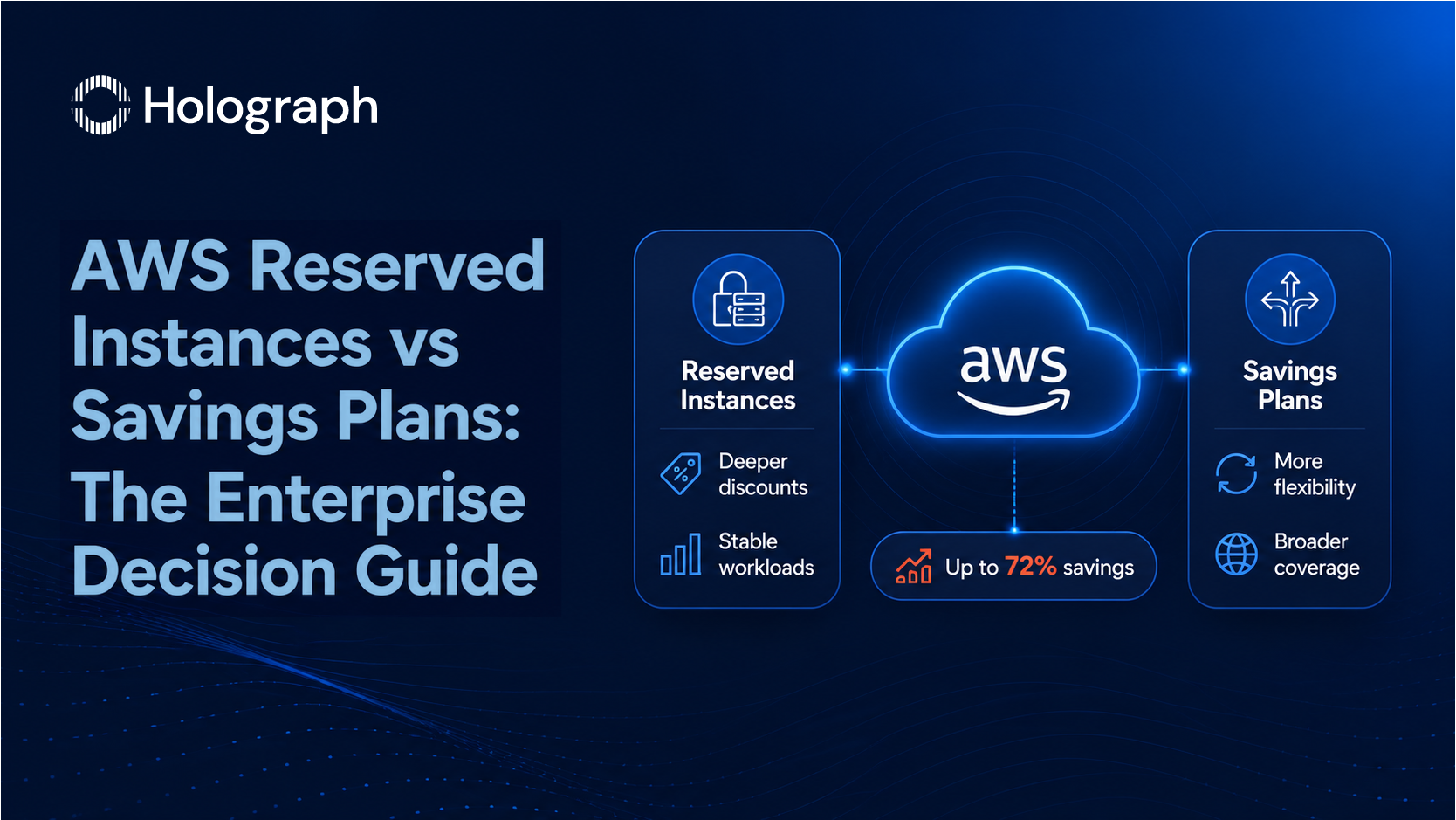
Isolated commitment pricing. Reserved Instances and Savings Plans purchased in one payer account cannot share their discount benefit with workloads in a separate, unrelated payer account. Idle Reserved Instance capacity in one account cannot offset on-demand usage in another. Each separate account manages its own commitment pricing in isolation, with its own coverage gaps, its own RI waste, and no ability to redistribute surplus commitment coverage to where it is needed. The commitment pricing strategy that maximises discount coverage under a consolidated organisation is covered in AWS Reserved Instances vs Savings Plans: The Enterprise Decision Guide.
These three cost factors compound. The total financial impact of account sprawl is typically larger than a single billing analysis reveals, because the discount foregone, the duplicate support spend, and the commitment pricing inefficiency each operate on different parts of the bill simultaneously.
How AWS Account Consolidation Reduces Costs
AWS Organizations consolidated billing is the mechanism that converts account sprawl from a persistent cost into a recoverable one.
When member accounts come under a single AWS Organization with consolidated billing enabled, their usage is aggregated for pricing purposes. Combined monthly spend crosses volume thresholds that no individual account would reach independently. Pricing tiers on services such as data transfer, S3 storage, and compute apply to the aggregate, reducing per-unit costs across every account in the organisation.
Reserved Instance and Savings Plan coverage distributes automatically across member accounts once sharing is activated. An RI purchased in the production account applies to matching usage in the development account at no additional cost. A Savings Plan committed in the management account distributes its discount benefit to whichever member account generates the most beneficial matching usage each hour. This automatic redistribution increases effective commitment pricing utilisation across the organisation without requiring each account to manage its own purchasing. The result is less workload running at full on-demand rates across the portfolio as a whole.
Closing accounts identified for consolidation removes their standing costs. Accounts provisioned for projects that concluded eighteen months ago are not running meaningful workloads; they are generating support fees, minimum service charges, and engineering overhead. Closing five accounts that were provisioned for completed projects, or merging their remaining workloads into active accounts, eliminates those costs permanently.
A Real Account Consolidation Engagement: Better Place
Better Place operated 19 separate AWS accounts when Holograph began the engagement. Each account carried its own billing relationship, its own on-demand pricing, and no shared governance documentation. The accounts had accumulated organically across different teams, projects, and stages of the business, without a central account strategy.
Monthly AWS costs fell by 34.5 per cent over the course of the four-month engagement.
Holograph consolidated the environment from 19 accounts to 14, restructured the remaining accounts under AWS Organizations with consolidated billing, and established the governance infrastructure and documentation that had not previously existed. The five accounts that were merged or closed had been provisioning costs without active workloads that justified their continued operation.
The 34.5 per cent reduction came from the three mechanisms in combination, not from any single change. Consolidated billing enabled volume discount pooling across the 14 remaining accounts. Shared Reserved Instance and Savings Plan coverage across the organisation increased the effective utilisation of existing commitment pricing. The account closures removed standing billing and support costs. Individually, each change delivered a fraction of the total saving. Together, they produced the 34.5 per cent reduction over four months.
The governance framework established during the engagement continued to operate after the project concluded. The tagging policies, Service Control Policies, and account creation process put in place during consolidation prevent the conditions that produced the original account sprawl from recurring.
The Consolidation Process: What It Takes
The economics of account consolidation are straightforward. The execution requires careful sequencing, particularly where individual accounts have separate billing relationships or enterprise agreement terms with AWS.
Phase 1: Account discovery and mapping. Identify every AWS account in the estate, including accounts held by acquired entities and accounts provisioned by teams outside central IT. For each account, document the active workloads, monthly cost, billing relationship (payer or member), and enterprise agreement terms. Discovery tools within AWS Organizations surface member accounts that have already been invited; accounts in separate organisations require manual identification.
Phase 2: Consolidation planning. Determine which accounts should be merged, which should be closed, and which should remain as member accounts in the consolidated organisation. Production accounts with active workloads typically remain as member accounts. Accounts holding only development workloads, completed project infrastructure, or resources with no active owner are consolidation or closure candidates. Finance confirms billing terms; IT confirms workload dependencies; legal reviews any enterprise agreement implications.
Phase 3: Governance infrastructure. Before accounts consolidate, establish the governance framework that will manage the organisation: Organisational Unit (OU) structure, Service Control Policies, tagging policies for cost allocation, and budget alerts. Building governance before consolidation means the consolidated organisation operates under a controlled framework from day one, rather than inheriting the undisciplined patterns of the accounts it absorbed.
Phase 4: Account consolidation. Migrate member accounts from separate payer accounts into the consolidated organisation. Move accounts from other AWS organisations where applicable. Close accounts identified for closure. Enable consolidated billing and activate Reserved Instance and Savings Plan sharing across the full organisation.
Phase 5: Ongoing governance. Service Control Policies prevent teams from creating new external payer accounts without authorisation. Quarterly account reviews identify any new account proliferation before it compounds. The governance infrastructure from Phase 3 is the mechanism that makes the cost reduction permanent rather than temporary.
Governance After Consolidation
Consolidating accounts delivers the initial cost reduction. Governance sustains it. An organisation that reduces 25 accounts to 12 and returns to 25 within two years has not reduced its AWS costs; it has deferred the next consolidation project by eighteen months.
Three tools within AWS Organizations form the governance baseline.
Service Control Policies. SCPs apply permission boundaries to all member accounts within an Organisational Unit, regardless of individual IAM policies within those accounts. A policy that prevents teams from provisioning new standalone payer accounts, combined with a defined process for requesting new member accounts under the organisation, eliminates the primary mechanism of organic account sprawl.
Tagging policies. Enforced tagging ensures every resource carries cost allocation tags for team, project, and environment. This delivers the billing clarity that originally justified separate accounts, without requiring separate accounts to achieve it. Removing the main operational reason for account proliferation is as important as implementing the technical controls that prevent it.
Budget alerts and anomaly detection. Monthly budget alerts at the account level surface unusual spend within days. AWS Cost Anomaly Detection identifies statistically unusual spend patterns automatically across the organisation. Together, these reduce the time between a cost problem emerging and the team responsible for that account becoming aware of it.
The same AWS Organizations structure that enables consolidated billing also underpins AWS License Manager's multi-account licence governance. Enterprises running BYOL programmes on Dedicated Hosts can manage licence compliance across all member accounts from a single configuration in the management account, using the same organisational hierarchy established during consolidation. The full BYOL and License Manager setup is covered in AWS License Manager and BYOL: How Enterprises Reduce Software Licensing Costs.
Holograph holds AWS Advanced Tier Services Partner status and delivers account consolidation and governance engagements for enterprise clients across the USA, UAE, KSA, and India.
Frequently Asked Questions
What is AWS account consolidation and why does it reduce costs?
AWS account consolidation moves multiple separate AWS accounts under a single AWS Organization with consolidated billing enabled. This produces cost savings through three mechanisms: volume discount pooling (combined usage across all accounts qualifies for higher pricing tiers), shared Reserved Instance and Savings Plan coverage (commitment pricing purchased in one member account applies automatically to matching usage across all other member accounts), and elimination of duplicate fixed costs such as separate AWS Support contracts. Enterprises that have accumulated accounts through team growth, project provisioning, or acquisitions typically find measurable savings available through consolidation.
How many AWS accounts does a typical enterprise have?
Enterprises that have operated on AWS for three or more years without central account governance commonly hold between 20 and 60 accounts. Organisations that have grown through acquisitions can have significantly more. The pattern is consistent: accounts accumulate faster than they are retired, and the total account count is rarely visible to finance or central IT until a specific audit is run. Most enterprises that have not reviewed their account structure since initial AWS adoption will find consolidation opportunities.
What is AWS Organizations and how does consolidated billing work?
AWS Organizations is Amazon's account management service that lets enterprises group multiple AWS accounts into a single organisation with central management. Consolidated billing combines the usage from all member accounts for pricing purposes, sharing volume discounts, Reserved Instance benefits, and Savings Plan coverage across the organisation. A single monthly invoice is issued to the management account, with a per-account usage breakdown for internal cost allocation. Consolidated billing is available at no additional charge as a feature of AWS Organizations.
How do Reserved Instances and Savings Plans share across multiple AWS accounts?
Within an AWS Organization with consolidated billing and RI and Savings Plan sharing enabled, AWS automatically applies commitment pricing discounts to the most beneficial usage across all member accounts each hour. A Reserved Instance with no matching usage in the account that purchased it during a given hour applies its discount to matching usage in any other member account. No additional configuration is required beyond activating sharing at the organisation level. This automatic redistribution increases effective commitment coverage across the portfolio without requiring each account to manage its own purchasing.
What is the risk of having too many AWS accounts?
The primary financial risks are fragmented volume discounts, inability to share Reserved Instance and Savings Plan coverage across accounts, and duplicate fixed costs including support contracts. Operationally, multiple separate payer accounts create compliance monitoring gaps: security policies enforced in one account do not automatically extend to separate payer accounts, and cost anomalies in one account are invisible to teams monitoring a different account. The governance and financial risks compound together the longer the account sprawl goes unaddressed.
How long does an AWS account consolidation project typically take?
Timeline depends on the number of accounts, the complexity of existing billing relationships, and whether any accounts have separate enterprise agreements with AWS. A consolidation project covering 15 to 25 accounts typically runs four to twelve weeks from discovery to activated consolidated billing. Discovery and planning take the most time; the technical work of moving accounts under a single organisation and activating sharing is generally faster than the coordination required to confirm workload ownership, billing terms, and enterprise agreement implications. The Holograph engagement with Better Place, which consolidated 19 accounts to 14 and established full governance infrastructure, completed in four months.
Holograph delivers AWS account consolidation and governance engagements for enterprise clients across the USA, UAE, KSA, and India. Review your AWS account structure with the Holograph team.