What Every CIO Should Know About Multi-Vendor License Management in 2026
.png)
Key Takeaways
- The average enterprise now juggles over 130 different software tools, and ADAPT's CIO Edge research (2025) found that 68% of CIOs are planning vendor consolidation initiatives targeting a 20% reduction in vendor count. Multi vendor software license management is the operational discipline that makes that consolidation financially productive.
- Managing each vendor relationship in isolation creates three compounding costs: duplicate governance effort, missed cross-vendor negotiation leverage, and scattered renewal timelines that prevent strategic budget planning.
- CIOs in 2026 are choosing between three approaches to multi vendor software license management: building an internal SAM team, layering FinOps onto existing IT operations, or engaging a multi-OEM license management partner. The right choice depends on vendor count, license spend, internal expertise, and audit exposure.
- Building the business case for the CFO requires quantifying the specific waste: unused seats, tier misalignment, renewal timing penalties, and cross-vendor duplication. The numbers are typically large enough to fund the solution.
Introduction
Multi vendor software license management is the challenge that most CIOs recognize but few have solved systematically. The enterprise runs Atlassian for engineering workflows, Microsoft for productivity and cloud infrastructure, Adobe for creative and document management, AWS or Google Cloud for compute, and increasingly GitLab for DevOps pipelines. Each vendor relationship was established independently. Each carries its own licensing model, renewal timeline, pricing structure, and audit methodology. And in most organizations, each is managed by a different team with a different budget line.
BCG's 2025 IT Spending Pulse survey of over 300 senior IT leaders found that nearly two-thirds now rank cost management as a top priority, with 58% planning to implement cost control measures. Software licensing is one of the largest controllable cost categories in the IT budget, yet it remains one of the least governed.
The reason is structural. Multi vendor software license management requires visibility across vendors, expertise in each vendor's licensing model, and the negotiation leverage to act on what the data reveals. Most enterprises have some of these capabilities for some of their vendors but not all of them for all of their vendors. That gap is where the waste accumulates.
The Hidden Cost of Vendor-by-Vendor Management
When each vendor relationship is managed in isolation, three categories of cost emerge that do not appear on any single vendor's invoice.
Duplicate governance effort
Each vendor requires its own license tracking, compliance monitoring, renewal preparation, and usage analysis. The SAM team (or more commonly, the IT procurement team that inherited the responsibility) repeats the same governance process for Atlassian, then again for Microsoft, then again for Adobe. The labor cost of running parallel governance workflows for five or six vendors is substantial, but because it is distributed across teams and budget lines, it rarely appears as a single number in the IT budget.
Missed cross-vendor negotiation leverage
An enterprise spending $4 million annually across six major software vendors has significant negotiation leverage. But that leverage only materializes when the full picture is visible. Negotiating each renewal independently means the Microsoft renewal team does not know that the Adobe budget could be redirected, that the Atlassian tier could be restructured, or that the AWS reserved instance strategy could free up funds for a Google Workspace expansion. Cross-vendor optimization requires a cross-vendor view, and vendor-by-vendor management prevents it.
Scattered renewal timelines
As we've explored in our renewal consolidation playbook, scattered renewal dates create budget unpredictability, prevent coordinated negotiation, and increase the risk of auto-renewal at unfavorable terms. When six vendors renew in six different months, the procurement team is perpetually in reactive mode rather than executing a planned optimization strategy.
What "Multi-Vendor" Really Means in 2026
The term "multi-vendor" carried a simpler meaning five years ago. In 2026, multi vendor software license management encompasses four distinct licensing categories running simultaneously.
SaaS subscriptions. Per-seat, per-user, or per-active-user licensing for cloud-native tools. Atlassian Cloud, Microsoft 365, Adobe Creative Cloud, Salesforce, and Google Workspace all use some variation of this model. The waste pattern is consistent: seats are provisioned for employees who leave, teams that downsize, or use cases that shift, and nobody reclaims the licenses.
On-premises entitlements. Perpetual licenses, maintenance agreements, and Software Assurance contracts for server-based software. Windows Server, SQL Server, Oracle Database, and legacy infrastructure tools still carry significant on-premises license obligations. The virtualization layer adds another dimension of complexity, with licensing rules that differ by vendor and by hypervisor.
Cloud consumption. Reserved instances, savings plans, and pay-as-you-go resources in AWS, Azure, and GCP. This is the domain of FinOps, and it operates on a fundamentally different metric (resource utilization per hour) than SaaS or on-premises licensing.
Marketplace and add-on licensing. Atlassian Marketplace apps, Microsoft AppSource add-ons, AWS Marketplace subscriptions, and Chrome extensions that departments purchase independently. This category grows silently and is the hardest to track because purchasing happens outside centralized procurement.
A CIO responsible for multi vendor software license management in 2026 must govern all four categories across all major vendors simultaneously. The 7 signs of enterprise license overspending are amplified when they appear across five or six vendor ecosystems rather than one.
Three Approaches CIOs Are Taking
Internal SAM team
Building a dedicated Software Asset Management team provides the most direct control. The SAM team deploys a platform (Flexera, Snow, ServiceNow SAM), configures discovery agents, normalizes license data, and manages compliance. The approach works well when the organization has the budget for 3 to 5 dedicated SAM professionals, when the vendor landscape is relatively stable, and when compliance defense is the primary objective.
The limitation is negotiation. SAM teams generate the data that identifies waste. Converting that data into actual cost savings requires vendor negotiation skills, market pricing knowledge, and the leverage that comes from managing large license portfolios across multiple clients. Most internal SAM teams do not have that capability.
FinOps practice
A FinOps practice addresses the cloud consumption layer specifically. The approach is powerful for organizations with significant AWS, Azure, or GCP spend, and the cultural shift toward engineering cost accountability delivers lasting behavioral change. Our detailed comparison of FinOps and license management explores why FinOps alone leaves 60 to 70% of the software license portfolio unoptimized.
Multi-OEM license management partner
An external partner with multi-OEM relationships manages the full license portfolio: assessment, optimization, negotiation, implementation, and monitoring. The model is particularly effective for multi vendor software license management because the partner brings cross-vendor perspective, vendor-specific expertise, and negotiation leverage that individual enterprises cannot replicate internally.
The decision framework for choosing between these approaches depends on the specific enterprise profile, but the tipping point toward a multi-OEM partner typically arrives when the organization manages four or more major vendors, total license spend exceeds $2 to $3 million annually, and the internal team lacks the bandwidth to manage renewals and negotiations across all vendors simultaneously.
Building the Business Case to the CFO
CIOs who want to invest in multi vendor software license management must quantify the waste in terms that resonate with the CFO. Abstract claims about "optimization" do not survive budget committee scrutiny. Specific numbers do.
The business case framework starts with four data points.
Unused seats. Pull usage reports from each vendor's admin portal. The gap between provisioned seats and active users, multiplied by per-seat cost, produces the first savings figure. ADAPT's 2025 research found that organizations targeting vendor consolidation are saving 20 to 40% in IT costs. A significant portion of that savings comes from eliminating unused seats that accumulate when vendors are managed independently.
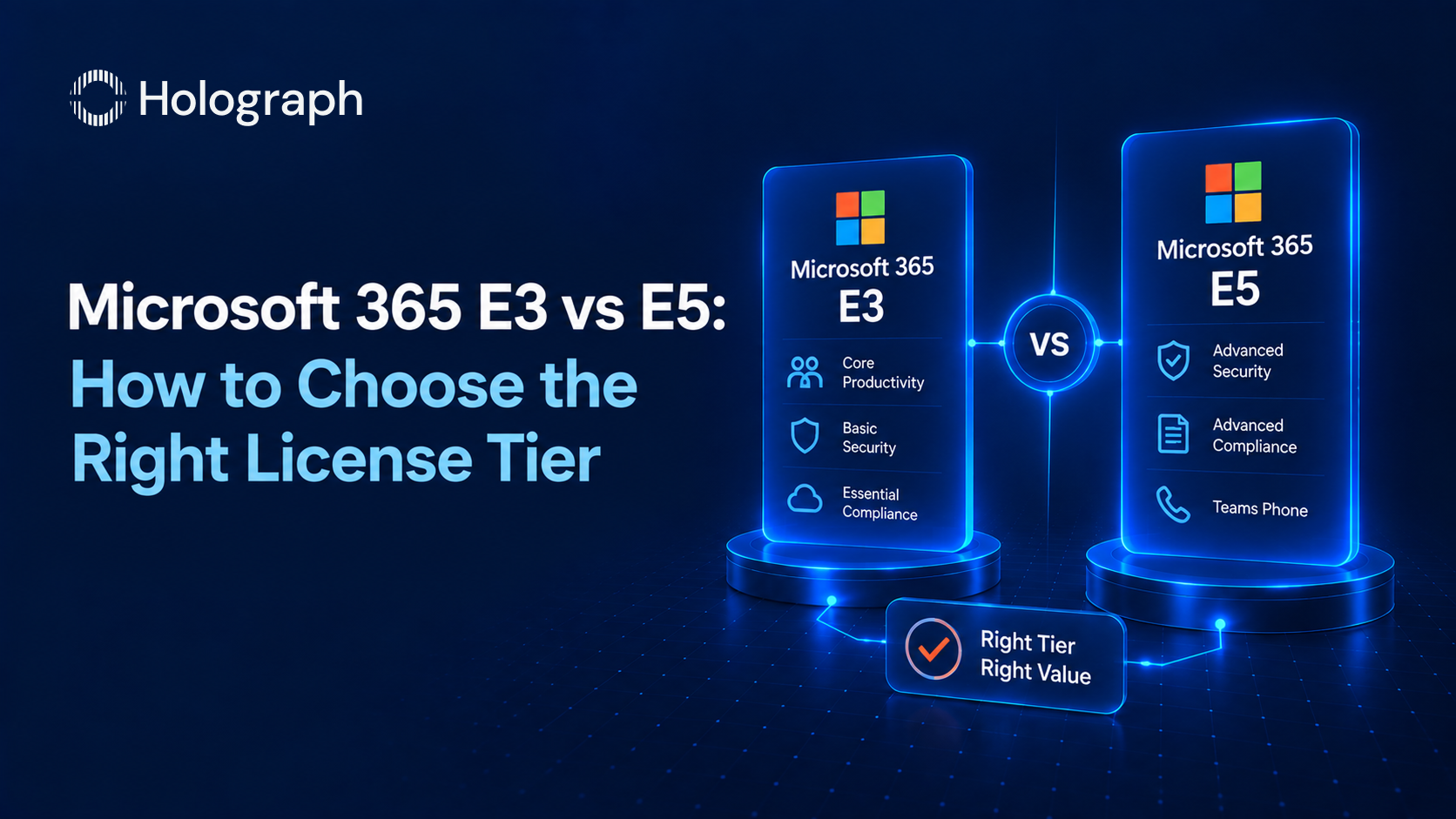
Tier misalignment. Compare the features each user actually needs against the tier they are licensed for. Microsoft E5 users who only need E3 capabilities, Atlassian Premium users who would be served by Standard, Adobe full Creative Cloud users who only use Acrobat. The tier gap is typically the second-largest savings category.
Renewal timing penalties. Calculate the auto-renewal premiums, missed negotiation windows, and pricing escalations that result from scattered renewal dates. This is the cost of reactive vendor management.
Cross-vendor duplication. Identify overlapping capabilities across vendors: Microsoft Teams and Slack, Confluence and SharePoint, multiple project management tools, redundant security subscriptions. The duplication is rarely visible from within a single vendor's ecosystem.
When these four numbers are added together, the total waste typically ranges from 15 to 30% of total license spend. That figure makes the business case self-evident. The investment in multi vendor software license management pays for itself within the first optimization cycle.
The CIO's Decision Framework
The path forward depends on where the organization sits today.
For enterprises with fewer than three major vendors and a strong internal SAM team, an internal approach with targeted tool investments is sufficient. For organizations with significant cloud spend and FinOps maturity, adding a FinOps practice to the existing governance structure addresses the cloud layer effectively.
For the majority of mid-market and enterprise organizations managing four or more vendors with limited internal SAM resources, a multi-OEM license management partner provides the fastest path to measurable savings. The partner handles the assessment, optimization, negotiation, and monitoring while the internal team focuses on strategic priorities rather than license administration.
The complete guide to building this practice, including the process framework and vendor-specific considerations, is available in our enterprise guide to software licensing management.
Related Reading
- Enterprise Guide to Software Licensing Management: How to Cut 30% of License Waste (Pillar page)
- 7 Signs Your Enterprise Is Overspending on Software Licenses (TOFU-1)
- Why Cloud FinOps Fails Without Strong Software License Management (TOFU-2)
- Software License Management vs SAM vs FinOps: Choosing the Right Approach (MOFU-UC-3)
- Atlassian License Management and Cost Optimization Services (Atlassian hub)
This blog is part of Holograph's Software Licensing Management content series. For the complete picture of multi-vendor license governance, start with our pillar guide.