How to Reduce Atlassian Licensing Costs: An Enterprise Guide

A global steel manufacturer reduced its annual Atlassian licensing costs by 43%. It kept Jira, Confluence, and Bitbucket. It changed no workflows and moved no data to a new tool. The saving came from one thing: the company stopped paying for licenses it was not using and right-sized what it kept.
That is the pattern behind almost every large Atlassian bill. The tools are doing their job. The licensing around them has drifted. Teams grew, people changed roles, apps were added, and nobody revisited the arrangement. The result is an invoice that reflects last year's headcount and last year's decisions, not this year's usage.
This guide covers every lever that lowers an Atlassian bill, and how to pull each one without disrupting the teams that depend on the platform. We manage this work as an Atlassian Solution Partner with specialisations in ITSM, Cloud, and DevOps, and the approach below is the same one we run for enterprise clients.
Where Atlassian cost actually comes from
Atlassian Cloud bills per user, per product. Jira, Confluence, and Jira Service Management each count their own users on their own plan. That structure creates three cost drivers that most finance teams underestimate.
The first is that access equals cost. A user counts toward the bill the moment they are granted product access, whether they log in daily or never. To stop paying for someone, you have to deactivate them, remove them, or drop them from a synced directory. Simply having them in the system but inactive keeps the meter running. The same rule applies to certain administrative roles: a Trusted user, for example, is billable for each parent product on the site.
The second is the tier structure. Per-user rates step down as the user count climbs through published bands, which means an estate sitting just above a band boundary can pay a full tier premium for a handful of seats. Crossing a boundary reprices the whole population, not just the marginal user, so a small amount of seat growth can trigger a cost jump that nobody modelled.
The third is billing mechanics. On monthly plans, Atlassian uses Maximum Quantity Billing: the charge is based on the highest number of seats assigned at any point in the cycle, and removing seats mid-cycle does not credit that period. On annual plans, the user tier is fixed for the term and cannot be changed until renewal, and adding seats mid-term requires a formal upgrade quote. Both models reward a clean user count set before you commit, and punish a messy one.
These three drivers compound. Inactive seats push the user count toward a tier boundary; the tier boundary reprices everyone; and the billing model locks the inflated number in for the cycle or the year. Reversing that chain is what a licensing review does.
Jira Service Management adds a wrinkle worth knowing. It bills per agent, the staff who handle requests, not per end user, and the customers who raise tickets are unlimited and unbilled. That makes the agent definition a cost lever in its own right. Licensing every employee as an agent for visibility, rather than only the people who actually work tickets, is a common and avoidable overspend, and agent counts are worth auditing on the same schedule as Jira and Confluence seats.
The levers that cut Atlassian spend
None of the following requires a migration. Each one lowers cost while the same teams keep the same tools.
Right-size Jira users and tiers
The fastest saving in most estates is removing seats nobody uses. Atlassian records each user's last activity in the Last Seen column, so inactive accounts are visible in the admin console. Where you are unsure whether someone still needs access, you can suspend the seat rather than delete it: suspended users are not billed, and their roles return if you restore them. The steel manufacturer above cleared 300 idle Jira seats this way, part of right-sizing a fixed 500-user Data Center arrangement down to the 200 people who actually worked in Jira. The full method is in our guide to reducing Jira licensing costs.
Control Confluence billable users
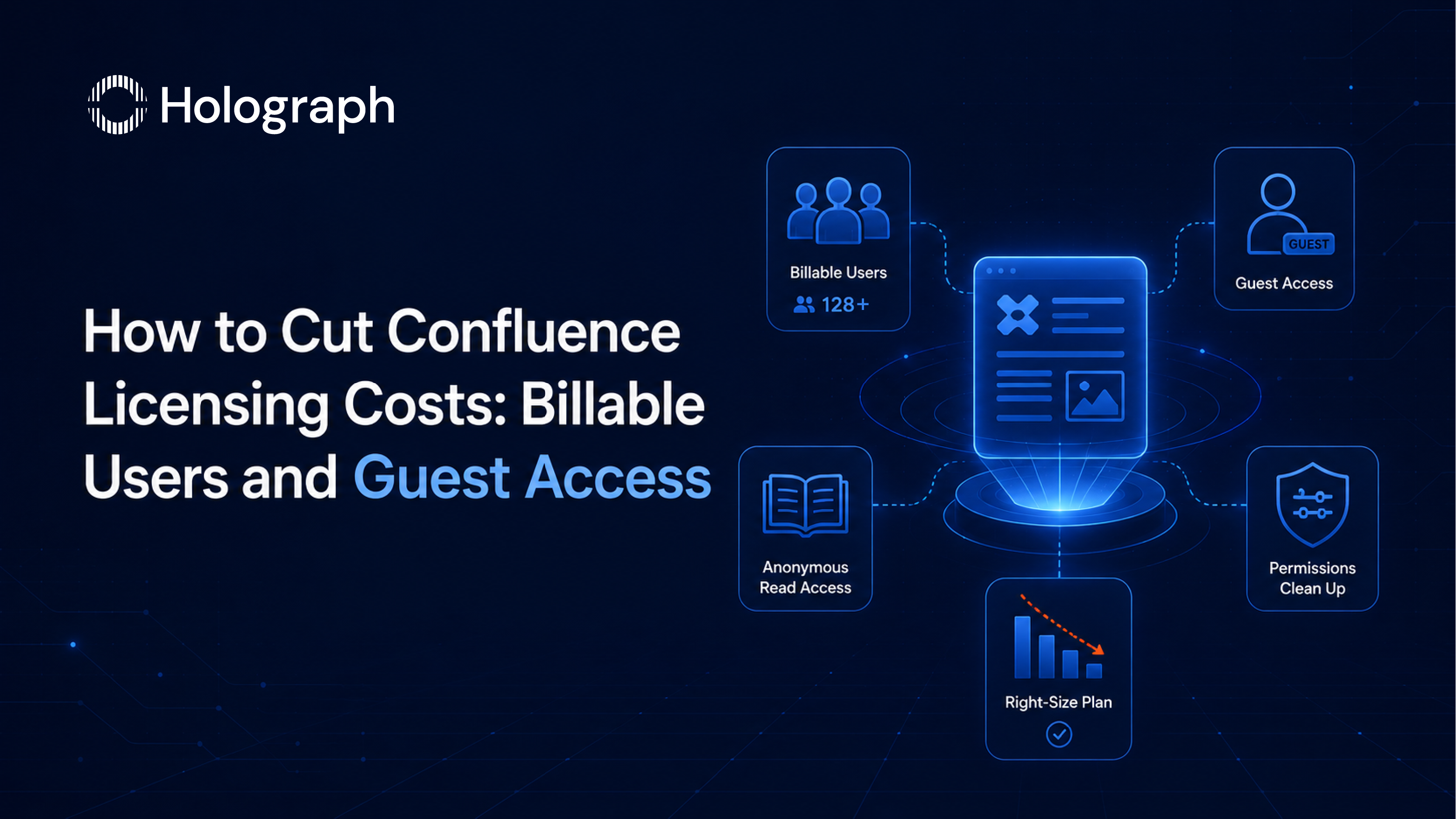
Confluence is where seat counts quietly balloon, because any user with access is billable, and read access spreads faster than editing access. The same engagement removed 400 idle Confluence seats. Confluence also offers free guest access for narrow external collaboration, up to five guests per paid user, which replaces paid seats for people who only need one space. We cover both in the guide to cutting Confluence licensing costs.
Time and lead the renewal
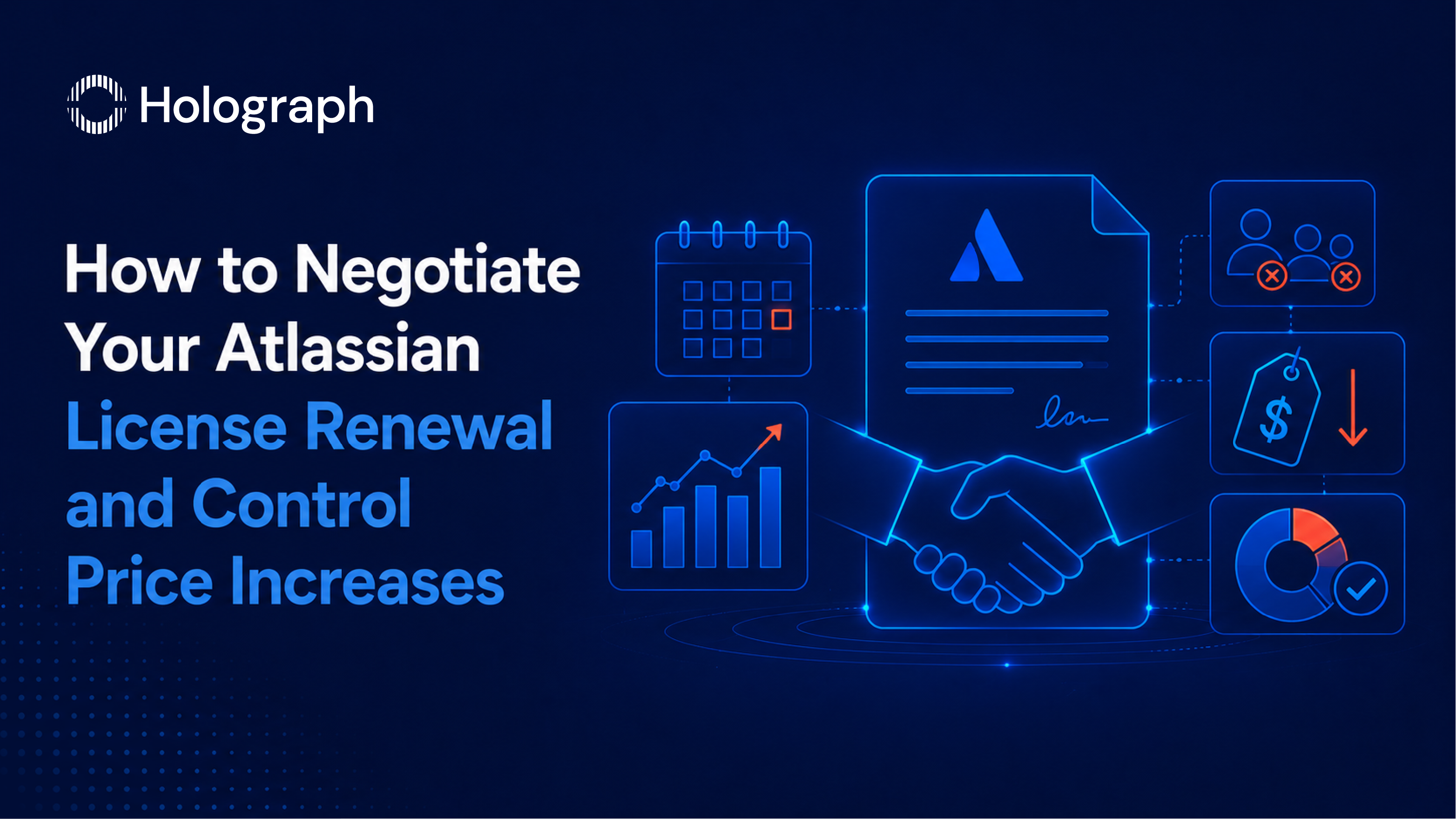
Atlassian raises Cloud list prices periodically, and renewals process automatically unless you plan them. Because the default is auto-renewal on a short notice window, a renewal left unattended locks in the new list price before anyone has looked at it. A payments company avoided a 20% increase by renewing on time after a licensing review, and cut its Atlassian spend from $350,000 to $260,000, a $90,000 (25.7%) reduction. The work starts months before the renewal date, not when the quote lands, which is enough lead time to clean up the estate before any number is committed. See how to negotiate your Atlassian license renewal.
Rationalise Marketplace apps
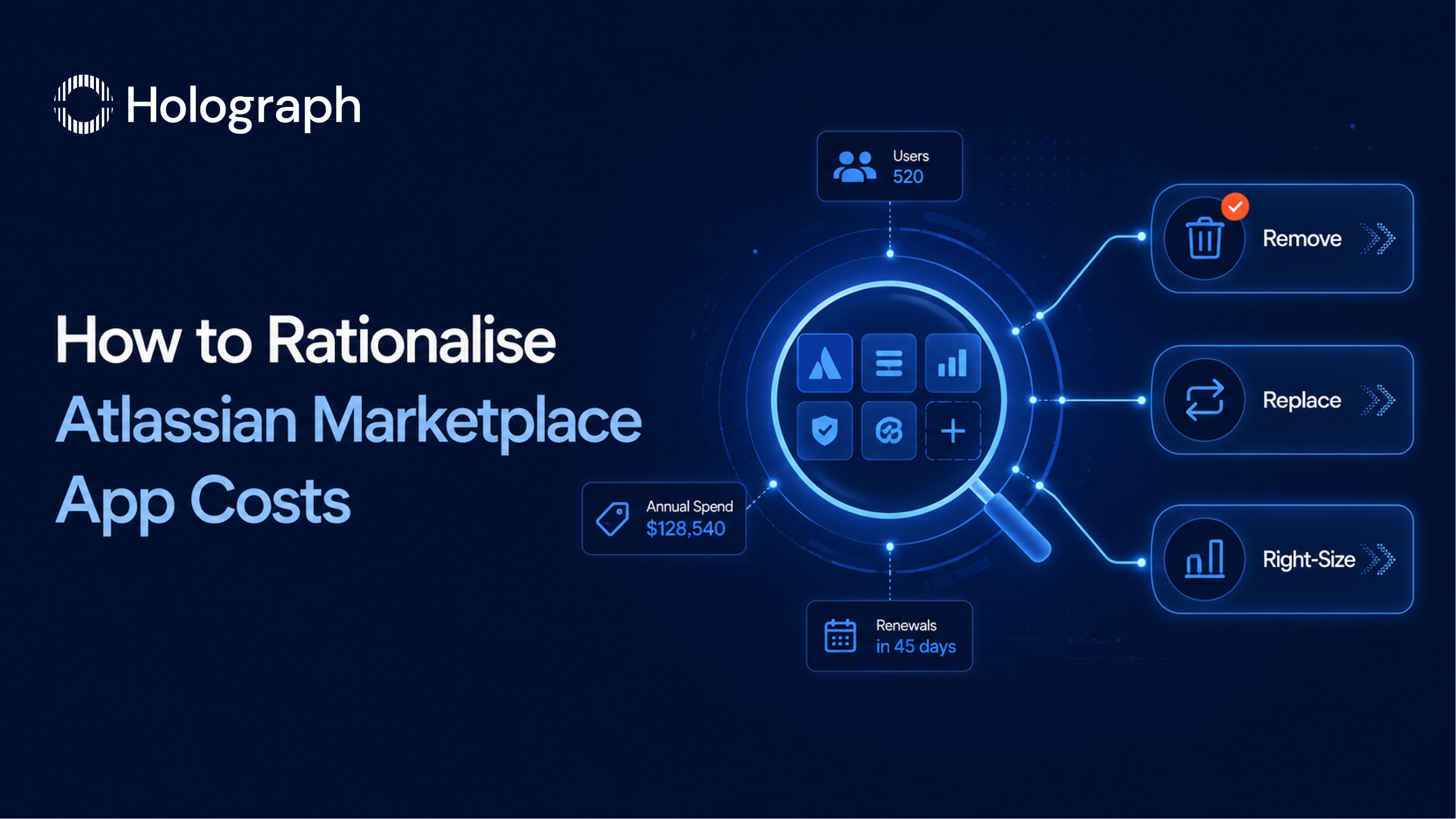
Marketplace apps are frequently a large share of the total bill and are rarely reviewed. Most apps are priced against the number of users in the host product, so the same inactive-seat problem inflates app cost too. An annual audit finds apps nobody uses, apps now covered by native features, and apps needed by fewer people than the license covers. The method is in our guide to rationalising Atlassian Marketplace app costs.
Match the edition to real need
Atlassian Cloud runs across Free, Standard, Premium, and Enterprise, and each step adds features, support, and a higher per-user rate. Standard covers most core work with business-hours support and 250 GB of storage. Premium adds advanced planning across teams, unlimited storage, a 99.9% uptime SLA, and 24/7 support. Enterprise adds a 99.95% SLA, multiple sites under central administration (up to 150), bundled Atlassian Guard for security, and centralised per-user licensing, so a user who works across several instances is paid for once rather than on each site.
The saving comes from matching each product to the edition its teams actually use, rather than defaulting the whole organisation to a higher tier for features only some teams need. This is a product-by-product decision. A team that relies on advanced planning may justify Premium, while a team that does not may run well on Standard at a lower rate. Reviewing those placements is worth doing before every renewal.
Assign ownership of the Atlassian bill
Cost drifts when nobody owns the user list. The durable fix is to name who is responsible for adding and removing users and who manages billing, and to keep at least two billing admins so the estate is never dependent on one person. When user lifecycle management has a clear owner, the seat count tracks real headcount instead of climbing quietly between renewals.
Directory sync deserves particular attention here. Where accounts are provisioned from a synced identity directory, every synced account with product access is billable, and offboarding that removes the identity but leaves product access in place keeps paying for people who have gone. Getting the sync rules right, so only active product users hold seats, closes one of the most common gaps between headcount and licensed users.
Decide Cloud or Data Center on cost, not by default
For large estates, the choice between Cloud and Data Center is a real cost decision with trade-offs on both sides, including which features are Cloud-only. If a move is on the table, model it before committing rather than accepting a like-for-like assumption. We cover the migration decision in our Data Center end-of-life roadmap.
What a no-migration licensing review looks like
A licensing review runs in a defined sequence. First, we pull the active-user picture per product from the last 90 days and compare it against the licensed seat count, using the Last Seen data to separate real users from dormant accounts. Second, we deactivate or suspend inactive users and map the estate against the tier boundaries, so the renewal lands at the bottom of a tier rather than the top of the one below. Third, we inventory Marketplace apps against real usage and remove overlap. Fourth, we right-size each product to the edition its teams use. Fifth, we time the renewal so the cleaned-up numbers are what gets committed, not last quarter's inflated counts.
Nothing in that sequence changes the tools your teams work in. The interfaces, the projects, the history, and the integrations stay exactly as they are. The bill is the only thing that moves, and because much of the saving is structural rather than a one-time discount, it holds at every renewal that follows.
The self-funding model
We start most engagements with the licensing review because it pays for itself. The saving from right-sizing an Atlassian estate is recurring, applying at every renewal, and it frees budget that can fund the wider work: implementation, adoption, and access to certified specialists when you need them. A government tax authority reduced its licensing spend by 35% on the same principle. The cost reduction comes first, and it funds what follows.
If you want the complete playbook, including how to pull the usage data and which waste patterns to check first, download our Atlassian license optimization guide.
Frequently asked questions
How is Atlassian Cloud priced?
Per user, per product, on banded tiers. Jira, Confluence, and Jira Service Management each count their own users, and the per-user rate steps down as the user count rises through published bands.
Why am I billed for users who never log in?
Because access equals billing. A user counts toward the bill once they have product access, regardless of activity. To stop paying, deactivate or remove them, or suspend the seat, which is not billed while suspended.
What is Maximum Quantity Billing?
On monthly plans, Atlassian charges you for the highest number of seats assigned to a product at any point in the billing cycle. Removing seats mid-cycle does not reduce that period's bill, so seat hygiene has to be consistent, not reactive.
Can we cut Atlassian costs without migrating?
Yes. Removing inactive seats, right-sizing tiers and editions, rationalising apps, and timing the renewal all lower cost while the same teams keep the same tools. No migration is required.
How often should we review Atlassian licenses?
Run a seat review monthly or quarterly, and a full estate review, including apps and editions, before every renewal. On annual plans the tier is fixed once you commit, so the pre-renewal review is what sets your cost for the year.
Cut your Atlassian bill without migrating