IT Staff Augmentation: The Enterprise Guide to Scaling Certified Technical Talent

The gap between the technology an enterprise has invested in and the results that technology produces is rarely a budget problem. It is a talent problem. Certified engineers who understand the implementation architecture of Atlassian, AWS, Azure, or Google Cloud are expensive to hire full-time and, in a competitive labour market, difficult to retain once they have built the experience your organisation paid to develop. The result is a pattern most IT Directors recognise: a live platform that underperforms because the team that configured it did not have the certified expertise to design it correctly, or a backlog of optimisation work that accumulates because the right skills are not on the payroll.
IT staff augmentation resolves this mismatch. It adds certified specialist expertise to an existing IT team on a flexible basis, without the fixed cost of a permanent hire and without transferring ownership of the function to an external provider. This guide covers what augmentation is, the three delivery models, when each applies, how to structure an engagement for lasting value, and how to evaluate a partner's credentials before committing to one.
The three cluster posts in this set go deeper on specific scenarios: the decision between augmentation and outsourcing, hiring certified Atlassian engineers, and scaling a DevOps team without a full-time headcount commitment.
What IT Staff Augmentation Is
IT staff augmentation adds certified external specialists to an internal IT team for a defined scope of work, under the client team's direction and governance. The expertise is external. Ownership of the outcome stays with the client.
That ownership distinction defines the model. The IT Director or Engineering Manager who commissions an augmented specialist continues to own the outcome of the work. The specialist delivers within the client's tools, processes, sprint cycles, and quality standards. Nothing about the operational model changes except the skills available to execute it.
The Three Delivery Models
Enterprise staff augmentation operates through three commercial structures, each suited to a different scope and intensity.
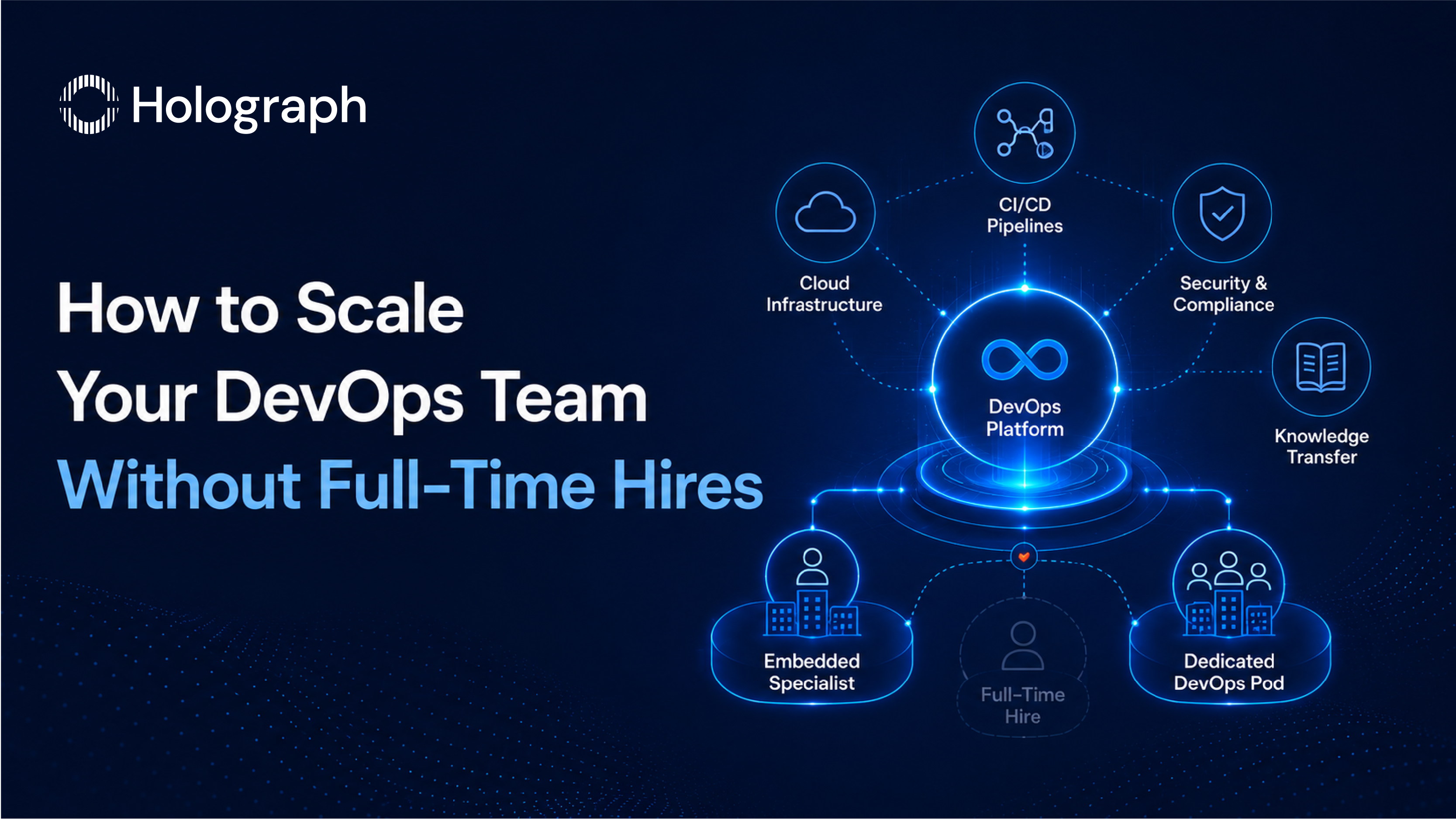
Embedded specialist: A single certified expert placed directly into the client team for a defined engagement period. The specialist integrates into daily workflows, joins sprint ceremonies, works inside the client's project management and ticketing systems, and collaborates with internal engineers continuously. Suited to focused implementation or optimisation work where one or two specialisations are needed without requiring a full team.
Dedicated pod: A structured team of specialists assigned exclusively to one client for a sustained engagement. Pod composition follows the client's requirements. A JSM implementation pod might include an ITSM architect, a configuration specialist, and a Confluence knowledge base engineer. A DevOps pod might include a pipeline engineer, a security specialist, and a delivery lead. The pod operates with full focus on the client's scope: no divided attention across multiple accounts. This model applies when the scope requires multiple specialisations or sustained delivery bandwidth over several months.
Shared specialist: Access to a pool of certified experts on a part-time or as-needed basis, shared across clients. The shared model suits ongoing advisory, periodic configuration review, and lower-intensity support where continuous daily presence is not required.
How Augmentation Differs From the Other Models
Three talent access models exist: direct hire, outsourcing, and staff augmentation. The structural differences matter more than most procurement conversations acknowledge, and conflating them at the scoping stage creates commercial structures that misfit the actual work.
Direct hire puts the expertise on the payroll permanently. The enterprise owns the skill and retains it, subject to attrition. The cost is a full-time salary, employer contributions, and the ongoing management overhead of a permanent headcount. This model fits when the enterprise genuinely needs that expertise daily, indefinitely, and has the organisational infrastructure to retain the hire against a competitive market.
Outsourcing transfers ownership of the function to an external provider. The provider delivers a defined outcome under a service contract. Day-to-day operational control moves to the provider. This model suits commoditised functions with measurable, contractable outcomes, where the client's primary interest is in what the function produces rather than in how it operates.
Augmentation adds expertise to a function the client's team continues to own and run. Control stays internal. Specialists deliver within the client's governance structure. For enterprise IT teams that need certified expertise periodically rather than continuously, augmentation resolves the direct hire cost problem without the control trade-off that outsourcing requires.
When Certified Technical Talent Becomes a Business Constraint
Three recurring scenarios produce the talent access problem in enterprise IT. They share a root cause: the organisation needs certified technical depth at a specific point in a project or operational cycle, but that depth is either absent from the internal team or not available in the volume the work requires.
Platform Implementation Projects
Platform purchases come with licences. They do not come with the certified expertise to implement the platform to enterprise-scale architectural standards. The Atlassian ITSM architecture that produces a functioning service management capability (a correctly designed service catalogue, SLA tier logic grounded in business impact definitions, routing automation, and a Confluence knowledge base integrated before portal go-live) requires implementation knowledge that most internal IT teams have not developed. They have operational knowledge of the platform. Operational knowledge and implementation architecture are different disciplines.
The pattern that follows is predictable. The internal team configures the platform against existing workflows rather than against a designed service management framework. The platform goes live. Twelve months later, the self-service portal is unused, SLA breach rates are unchanged, and the business raises requests by email. The remediation that follows carries an additional complication: correcting a live system with active data is significantly harder than designing it correctly before go-live. For the full ITSM design and implementation sequence, see the Enterprise ITSM guide.
Optimisation Engagements
A platform live for 12 to 24 months typically has a visible set of optimisation opportunities: JSM automation rules never configured, Confluence knowledge base architecture never built, DevOps pipelines running without security integration, cloud environment costs growing without governance. The internal team can identify the opportunities. Execution often requires a certified depth of platform knowledge the team does not carry.
This work is time-limited. A JSM optimisation engagement, a cloud governance architecture review, a CI/CD pipeline security audit: each has a defined start and end. Hiring a full-time specialist to execute a three-month engagement and retaining them at permanent cost is a poor commercial decision. The role does not exist after the engagement concludes, and the enterprise will not retain a specialist who has no ongoing scope to justify their position.
Ongoing Specialist Coverage
Regulated industries present a third scenario. Financial services firms and government organisations running Atlassian ITSM platforms for internal operations need ongoing certified oversight of configuration changes, security posture, and compliance-relevant workflows. That oversight need is continuous but narrow: it does not require a certified solution architect working full-time. It requires one available for a defined number of hours per week or month to review changes, advise on configuration decisions, and flag risks before they become incidents.
The shared specialist model addresses this directly. Access to certified expertise at a fraction of full-time cost, available within agreed response times, without the administration overhead of a permanent hire.
The Three Talent Access Models: A Decision Framework
The decision between direct hire, outsourcing, and augmentation is not a question of preference or budget. It is a question of what the enterprise needs to own and how continuously it needs it.
When Direct Hire Is the Right Decision
Direct hire is correct when the enterprise needs a specific expertise continuously, the role is strategically important enough to warrant retention investment, and the organisation can compete in the talent market for that skill. A full-time DevOps lead who will own the enterprise's CI/CD architecture for the next five years is a direct hire decision. The expertise will be used every week, the role requires institutional knowledge that builds over time, and the enterprise is prepared to invest in retention.
The failure mode for direct hire is using it for project work. An enterprise that hires a certified ITSM architect to implement JSM and then finds the role under-utilised after go-live has created a structural overhead. The hire stays because retention costs less than turnover in the short term. The role gradually shifts to general IT operations work that does not require the certified depth that was brought in. The specialist leaves 18 months later, and the cycle starts again.
When Outsourcing Is the Right Decision
Outsourcing transfers ownership of a function to a provider who delivers against a service contract. The client specifies the outcome; the provider determines how to achieve it. The model is effective when the function is commoditised, the outcome is measurable and contractable, and the enterprise's primary interest is in what the function produces rather than in how it operates.
Tier-1 helpdesk operations are a standard outsourcing candidate. The outcome (tickets resolved within SLA) is measurable. The process by which agents resolve them is not strategically differentiated. The client does not need to own the operational methodology.
Outsourcing performs poorly when the function requires close integration with the enterprise's own IT architecture and business processes. Platform configuration work, cloud architecture decisions, and DevOps pipeline design are not outcomes that can be fully specified in a contract. The dependencies are too contextual. Transferring accountability to a provider who lacks institutional context is the source of most outsourcing disappointment in complex technical engagements.
When Augmentation Is the Right Decision
Augmentation fits when the enterprise has a function to run and a team to run it, but needs specific certified expertise to run it well, at a level of intensity that does not justify a full-time hire.
The practical test: can the internal team lead own the outcome of the work if the specialist is not present? If the answer is yes, the specialist is augmenting an existing capability. If the answer is no, the function has effectively been outsourced in the guise of augmentation, and the enterprise has created a dependency.
Well-structured augmentation engagements include knowledge transfer as a deliverable. The specialist carries expertise the internal team does not have. Over the engagement, that expertise transfers to the team. The goal is not continued reliance on the specialist; it is a more capable internal team on the other side of the engagement.
The detailed comparison of how to make this decision in practice is in IT Staff Augmentation vs IT Outsourcing.
What Certified Technical Expertise Means in Practice
Platform certifications exist because the decisions that determine long-term platform performance are not visible from operational experience. An IT team that has used Jira Service Management for three years has operational knowledge: how to raise tickets, manage queues, and run basic reports. That knowledge does not extend to the JSM architecture decisions that determine whether the platform produces measurable ITSM outcomes at enterprise scale.
The implementation knowledge that matters: ITIL 4 practice alignment, SLA tier design based on business impact and urgency definitions, routing automation architecture, and Confluence knowledge base structure built before portal go-live. This is what certification programmes exist to formalise and verify. Atlassian's Solution Partner programme requires demonstrated competency across implementation methodology, platform configuration, and client delivery. AWS's Advanced Tier Services Partner designation requires validated delivery experience and trained engineers across the AWS service portfolio.
Certification is not a credential for its own sake. It is the most reliable available indicator that the specialist has encountered the architectural decision points that matter at enterprise scale, and has worked through how to address them.
What to Look for When Evaluating Technical Credentials
Four dimensions apply consistently across technology ecosystems.
Platform vendor certification level: For Atlassian, the relevant credential is Atlassian Solution Partner status, with active specialisations in ITSM, Cloud, or DevOps depending on the scope. For AWS, the AWS Advanced Tier Services Partner designation indicates validated delivery experience across the AWS service portfolio. These are vendor-issued, audit-backed credentials, not self-declared competencies.
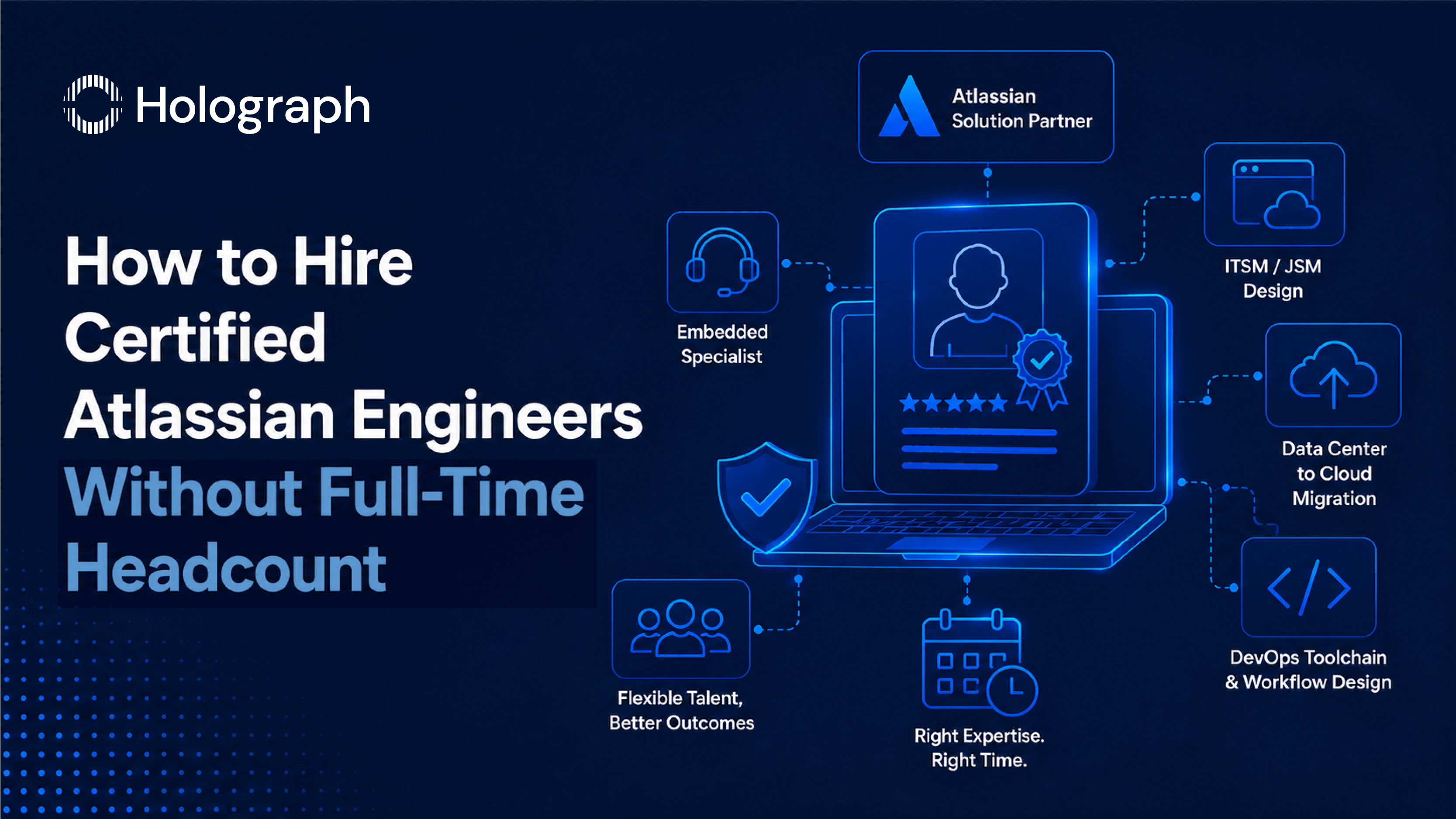
Specialisation depth within the credential: An Atlassian Solution Partner with a certified ITSM specialisation carries different relevance for a JSM implementation than an Atlassian partner without it. The specialisation indicates concentrated delivery experience in the relevant practice area, not just general platform familiarity. For Atlassian-specific hiring criteria, the evaluation framework is covered in depth in How to Hire Certified Atlassian Engineers Without Full-Time Headcount.
Evidence of enterprise-scale delivery: Credentials establish a floor. Evidence of delivery (named clients, industries, geographies, and engagement scope) determines whether the partner has operated at the scale the enterprise requires. The partner's client list, publicly available case studies, and references from the platform vendor's partner directory are worth examining before committing to an engagement.
Delivery infrastructure: Where the specialists are based, what time zone coverage they provide, and whether they can integrate into the client's operational model at the required intensity. An embedded specialist working asynchronously in a time zone that does not overlap with the client team's working hours is not meaningfully embedded. The geography of delivery determines the quality of integration.
How to Structure an Augmentation Engagement
Structure determines whether an augmentation engagement produces lasting value or creates a dependency that recreates the talent access problem at the next contract renewal.
Define Scope Before Selecting the Model
The engagement model follows the scope. Before deciding between an embedded specialist, a dedicated pod, or shared access, the IT Director or Engineering Manager needs to answer four questions: what specific work needs to happen, over what timeline, requiring what skills, and at what intensity?
A three-month JSM optimisation requiring one ITSM architect is an embedded specialist engagement. A 12-month platform migration requiring AWS expertise, security architecture, and project management bandwidth is a dedicated pod. Ongoing compliance oversight of a live Atlassian environment requiring 10 hours per month of certified advisory is a shared specialist arrangement.
Selecting the model before defining the scope creates a commercial structure that may not fit the actual work. It also makes the engagement harder to close out cleanly, because the deliverables were not defined precisely enough to serve as the handover criteria.
Build Knowledge Transfer Into the Scope
Augmentation is not a managed service. The expectation at the start of the engagement is that the specialist's expertise will partially transfer to the internal team by its conclusion. That transfer should be a scoped deliverable, not an informal aspiration.
Documentation of the decisions made during implementation, training sessions for internal team members on the configuration choices and their rationale, and a structured handover period at the end of the engagement are the mechanisms. They are far easier to specify at the start than to negotiate after a 12-month engagement where the specialist has become the primary operator of a system the internal team was never equipped to own.
Set Ownership Clearly from Day One
The IT Director or Engineering Manager who commissions the engagement owns the outcome. The augmented specialist owns the quality of delivery within their scope. The distinction becomes important when scope creep occurs, when priorities shift, or when the specialist encounters a decision point that requires business input rather than technical judgment.
Common engagement friction traces back to ownership ambiguity: the specialist makes decisions that should have been escalated, or the client team makes changes inside the specialist's scope without the specialist's input. Setting ownership boundaries explicitly at the start costs very little. Resolving ownership disputes mid-engagement costs considerably more.
How to Evaluate an Augmentation Partner
Certification and Specialisation Credentials
The evaluation begins with vendor-issued certification. The partner should demonstrate platform credentials that are current and relevant to the engagement scope: Atlassian Solution Partner status with active specialisations for Atlassian work; AWS Advanced Tier Services Partner status for AWS architecture. Credentials issued by the platform vendor carry more weight than equivalent claims made by the partner without vendor backing.
Delivery Geography and Infrastructure
Geographic delivery capability is consistently underweighted in partner evaluations, and its absence becomes operational friction once the engagement begins. A partner who delivers from offices in the same geographies the client operates in brings regulatory context, time zone alignment, and relationship continuity. For enterprises operating across the USA, KSA, UAE, and India, the partner's own geographic footprint determines how well the specialists can integrate with a distributed IT team.
Engagement Model Flexibility
The partner's commercial structure should accommodate the enterprise's actual needs rather than requiring the enterprise to adapt to a preferred format. A partner who operates only through dedicated pods will be mismatched for engagements that need shared specialist access. A partner who only offers shared specialists cannot deliver the sustained bandwidth of a pod engagement. Operational flexibility across engagement models is an indicator of delivery maturity.
Enterprise-Scale References
Testimonials on a website establish brand presence. Reference conversations with clients at comparable enterprise scale, in comparable industries and geographies, establish delivery credibility. The questions worth asking: how did the specialist integrate with the client's internal team, was knowledge transfer a genuine deliverable or an afterthought, and what did the internal team's capability look like at the end of the engagement compared to the start?
Holograph's Certified Talent Model
Holograph provides certified engineers and solution architects across Atlassian, AWS, Google Cloud, and Microsoft Azure through shared specialist and dedicated pod models. Holograph holds Atlassian Solution Partner status with certified specialisations in ITSM, Cloud, and DevOps, and AWS Advanced Tier Services Partner status. Certified specialists across all four ecosystems are based across Holograph's Global Capability Center in the USA, KSA, UAE, and India.
Holograph serves 170+ enterprise clients across financial services, manufacturing, software development, government, insurance, and automotive in all four geographies. Coverage extends across multiple enterprise technology ecosystems (Atlassian, AWS, Microsoft, Adobe, Google, GitLab, and JetBrains), enabling clients to access specialist coverage across their technology stack through a single engagement partner rather than through separate specialist relationships for each platform.
For the decision between augmentation and outsourcing, see IT Staff Augmentation vs IT Outsourcing. For Atlassian-specific hiring, certified JSM, DevOps, and Cloud specialists, and how to evaluate Atlassian expertise, see How to Hire Certified Atlassian Engineers Without Full-Time Headcount. For DevOps team scaling specifically and how augmented specialists integrate with engineering teams, see How to Scale Your DevOps Team Without Full-Time Hires.
The Model That Fits the Work
IT staff augmentation resolves the structural mismatch between how enterprises need certified technical expertise and how that expertise is typically priced. The delivery model that fits depends on scope and intensity: embedded specialists for focused implementation and optimisation engagements, dedicated pods for sustained high-bandwidth delivery requiring multiple specialisations, shared specialists for ongoing advisory and lower-intensity support.
The evaluation criteria for a partner are consistent across ecosystems: platform vendor certification at the relevant level, specialisation credentials in the practice area that matters for the engagement, delivery infrastructure in the geographies the enterprise operates in, and evidence of delivery at enterprise scale in comparable industries. Credentials establish the floor; delivery history determines how far above it the partner operates.
Holograph provides certified engineers and solution architects across Atlassian, AWS, Google Cloud, and Azure through embedded specialist and dedicated pod models from a Global Capability Center across the USA, KSA, UAE, and India. See staff augmentation services.
Frequently Asked Questions
What is IT staff augmentation and how does it work?
IT staff augmentation adds certified external specialists to an existing internal IT team for a defined scope of work, under the client team's direction and governance. Specialists work within the client's tools, processes, and sprint cycles. The client retains ownership of the outcome. The model operates through three structures: embedded specialists placed directly into the team, dedicated pods for larger multi-specialisation scopes, and shared specialist access for ongoing advisory and lower-intensity support.
What is the difference between IT staff augmentation and outsourcing?
In staff augmentation, the client's IT team retains ownership of the function and its outcomes. External specialists add expertise and deliver within the client's governance structure. In outsourcing, ownership of the function transfers to a provider who delivers a defined output under a service contract. Augmentation suits functions requiring close integration with internal teams and technical architecture. Outsourcing suits commoditised functions with contractable, measurable outcomes where operational control is not critical.
When should an enterprise use IT staff augmentation?
Three scenarios indicate an augmentation fit: a platform implementation project where the internal team has operational knowledge but not certified implementation expertise; a time-limited optimisation engagement requiring certified skills that do not justify a permanent hire; and ongoing specialist oversight in regulated industries where the expertise need is continuous but narrow. In each case, augmentation adds certified depth without creating the permanent overhead of a full-time headcount.
What certifications should an IT staff augmentation partner hold for enterprise platforms?
For Atlassian platforms, the relevant credential is Atlassian Solution Partner status, with specialisations in ITSM, Cloud, or DevOps matching the engagement scope. For AWS, the AWS Advanced Tier Services Partner designation indicates validated delivery experience across the AWS service portfolio. Credentials should be current, vendor-issued rather than self-declared, and specific to the practice area the enterprise needs for its work.
How do you structure an IT staff augmentation engagement?
Define the scope before selecting the delivery model: what work needs to happen, over what timeline, requiring what skills, at what intensity? Build knowledge transfer in as a scoped deliverable from the first week, not as an informal expectation. Set clear ownership: the client team lead owns the outcome; the augmented specialists own delivery within their scope. Plan for the handover before the engagement starts, not after the final invoice is raised.
What is a dedicated pod model and when does it make sense?
A dedicated pod is a structured team of certified specialists assigned exclusively to one client for a defined engagement. Pod composition is tailored to the scope: an ITSM pod might include an ITSM architect, a configuration specialist, and a Confluence engineer; a DevOps pod might include a pipeline engineer, a security specialist, and a delivery lead. The model applies when the work requires multiple specialisations or sustained delivery bandwidth across several months.
How do you measure the success of an IT staff augmentation engagement?
Three measures apply. First, delivery against the defined scope: were the deliverables completed to specification within the agreed timeline? Second, knowledge transfer: can the internal team operate and maintain what the specialists built? Third, operational outcome: has the platform or system performed measurably better since the engagement, against the baseline established before it started? An engagement that passes delivery but fails on knowledge transfer has only partially succeeded.
Access certified expertise without a full-time hire