How to Hire Certified Atlassian Engineers Without Full-Time Headcount
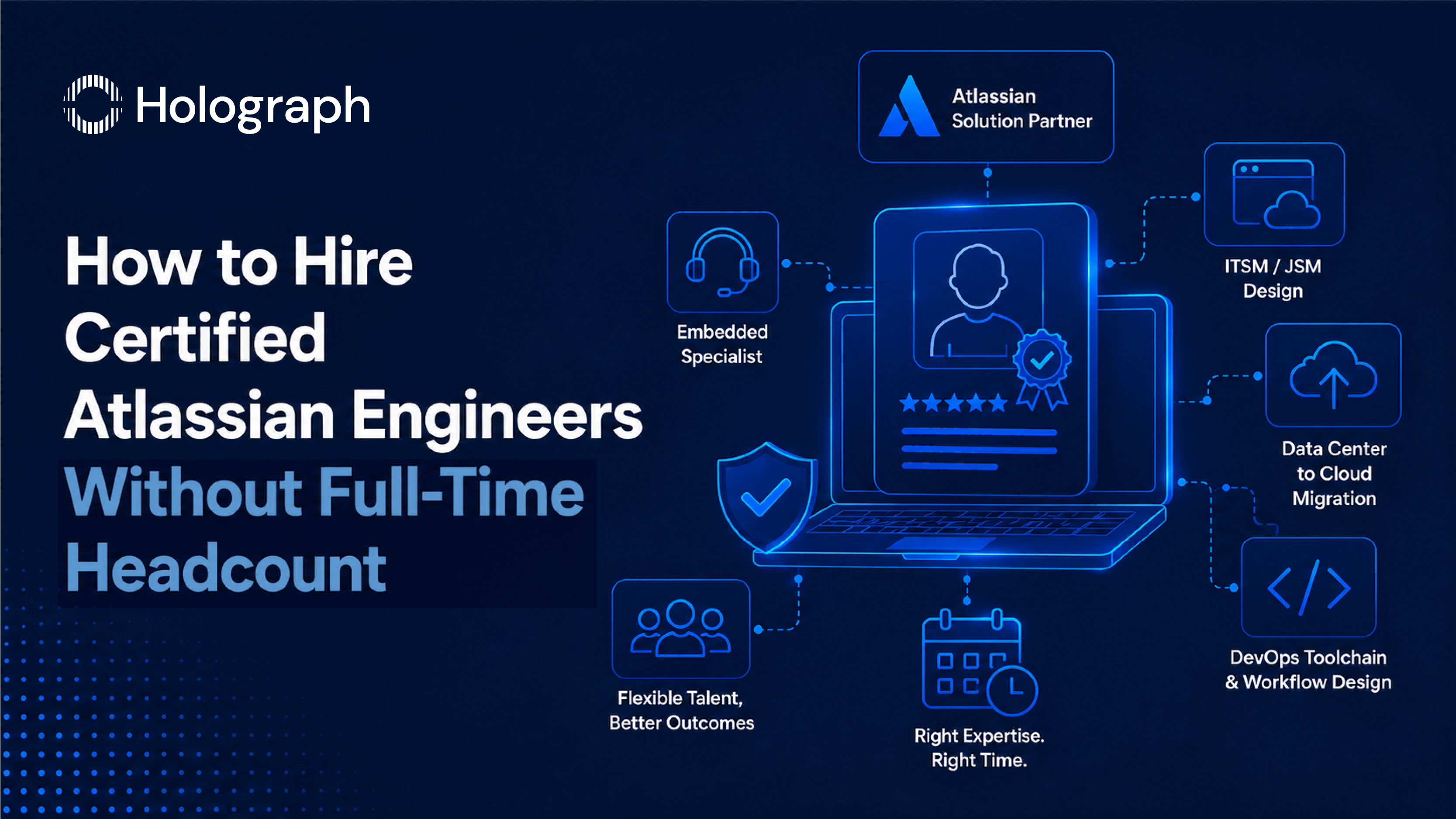
Certified Atlassian engineers are not generalist IT professionals. The expertise that makes an Atlassian implementation work at enterprise scale, where the configuration reflects the client's service management framework and not the platform's default settings, is specific and scarce. It is also, in most enterprise contexts, needed for a project or an ongoing advisory scope that does not justify a permanent hire.
The talent access problem here is familiar: the skill exists, but the right commercial model for accessing it is not a full-time employment relationship. This post covers what Atlassian certification means in practice, the three practice areas where certified expertise matters most, how to source qualified talent, how to evaluate it before committing to an engagement, and when an embedded specialist model fits better than a full-time hire.
For the broader framework on when augmentation is the right model at all, see the IT Staff Augmentation guide.
What "Atlassian Certified" Actually Means
The Atlassian certification landscape has two relevant levels: individual practitioner certifications and the Atlassian Solution Partner programme. For enterprise implementation work, the Solution Partner credential is the more meaningful indicator.
Atlassian's practitioner certifications cover specific products and roles. An ACP-120 (Jira Administration) certifies that an individual can administer a Jira instance. An ACP-620 (Jira Service Management Project Administration) certifies JSM project configuration knowledge. These are tool competency credentials. They indicate familiarity with the platform's features. They do not certify enterprise-scale implementation methodology.
The Atlassian Solution Partner programme operates at the organisation level. A Solution Partner has been assessed by Atlassian against delivery capability, customer success evidence, and technical competency across the partner organisation's team. The programme is not self-declared. Specialisations within the programme (ITSM, Cloud, DevOps) require demonstrated delivery experience in that practice area, not just tool knowledge.
When sourcing Atlassian expertise for an enterprise implementation, the relevant question is whether the specialist is part of an Atlassian Solution Partner organisation with active specialisations in the relevant practice area. That credential indicates the specialist's expertise has been assessed at the organisational level, not just the product level.
The Three Practice Areas Where Certified Expertise Matters
Atlassian's ecosystem covers a wide range of enterprise use cases. For implementation and optimisation work at enterprise scale, three practice areas account for the majority of where certified expertise makes a material difference.
ITSM: JSM Implementation and Service Management Architecture
The correct JSM configuration for an enterprise ITSM environment requires knowledge that goes well beyond platform administration. Service catalogue design, priority matrix logic built from business impact and urgency definitions, routing automation, SLA tier configuration, and Confluence knowledge base architecture integrated before portal go-live: these are design decisions, not configuration steps. They require understanding of ITIL 4 practice alignment and how it maps to JSM's native workflows.
An ITSM specialist certified in the Atlassian ITSM specialisation has delivered this design work at enterprise scale. They know which design decisions at the start of an engagement determine whether the platform produces measurable service management outcomes 12 months later. For a full walkthrough of the ITSM design and implementation sequence, see the Enterprise ITSM guide.
Cloud: Migration and Cloud Architecture
Atlassian has announced end of life for its Data Center platform, with new-customer license sales ending in March 2026, license sales to existing customers ending in March 2028, and full end of life on 28 March 2029, making cloud migration a planned requirement for a significant portion of enterprise Atlassian environments. The migration from Data Center to Atlassian Cloud involves data migration, configuration translation, integration redesign, and user adoption management. Doing it correctly requires knowledge of both the source and target environments.
An Atlassian Cloud specialist has delivered migrations at enterprise scale. They understand the configuration differences between Data Center and Cloud, the integrations that require redesign rather than lift-and-shift, and the governance and security architecture decisions specific to the Atlassian Cloud platform.
DevOps: Engineering Workflow and Pipeline Integration
Atlassian's DevOps toolset (Jira Software, Bitbucket, Bamboo, and their cloud equivalents) supports engineering workflow management, source control, and CI/CD pipeline execution. For enterprises running development at scale, the configuration of these tools determines whether the DevOps investment produces measurable engineering velocity improvement or adds process overhead without benefit.
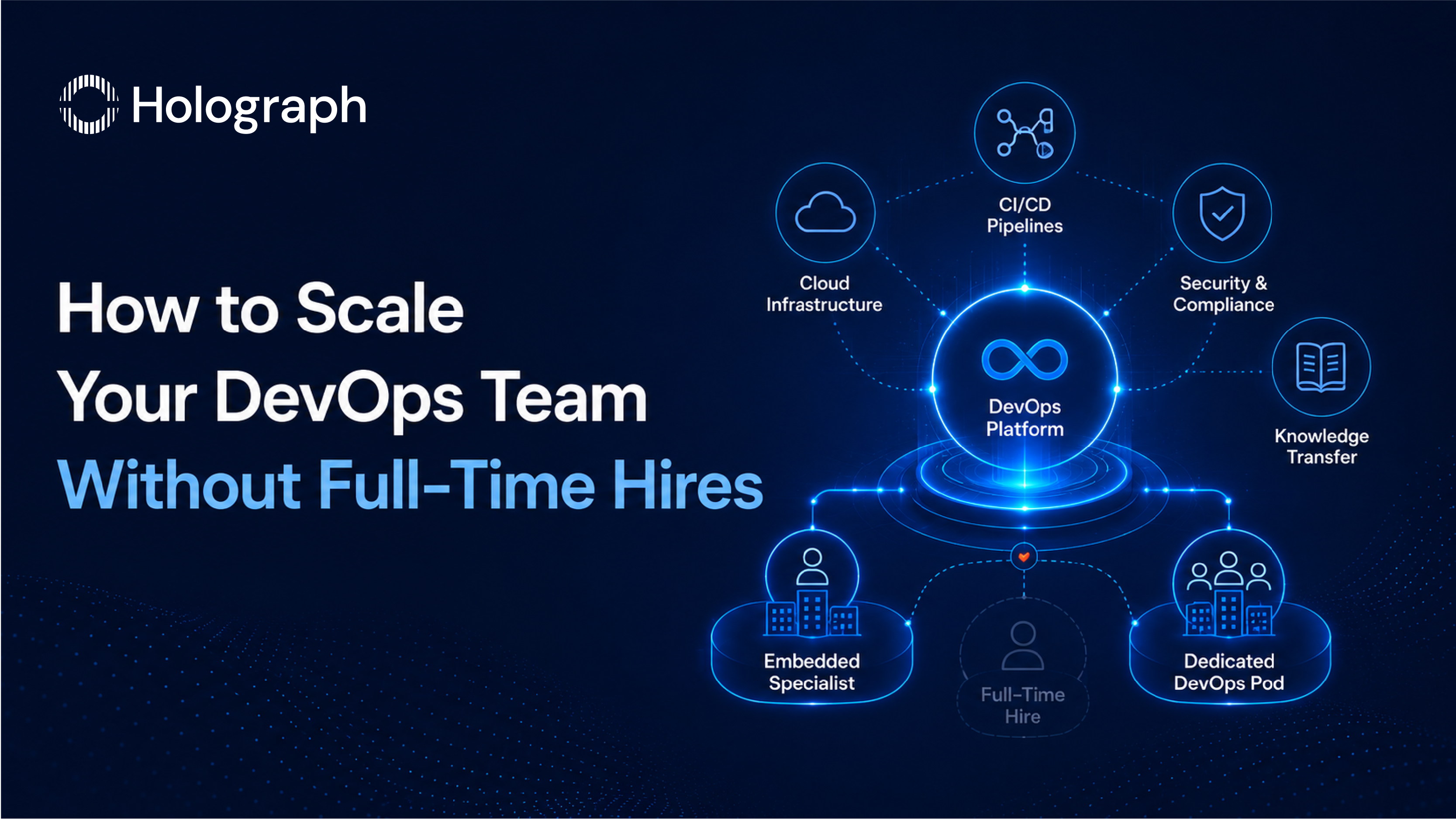
A certified DevOps specialist understands how Jira Software backlog management, sprint configuration, and reporting connect to the engineering team's delivery model. They know how Bitbucket pipelines integrate with deployment targets and how to structure the toolchain so that it reflects the team's actual development workflow rather than the platform's default assumptions. For DevOps team scaling specifically, see How to Scale Your DevOps Team Without Full-Time Hires.
Why General IT Experience Is Not Enough
The pattern that emerges from under-qualified Atlassian implementations is consistent. The internal team or generalist contractor configures the platform against existing workflows and IT department structure. The platform goes live. Twelve to 18 months later, the self-service portal is unused, the ITSM metrics are not improving, and the DevOps toolchain is producing process overhead rather than engineering visibility.
The gap is not a failure of effort. It is a failure of design. The decisions that determine long-term platform performance (ITSM practice alignment, service catalogue structure, SLA tier logic, pipeline architecture) require knowledge of what enterprise-scale implementations look like when they work well. That knowledge accumulates through delivery experience at the relevant scale, not through tool familiarity alone.
The distinction between operational knowledge and implementation architecture runs throughout Atlassian work. An administrator who can manage a running JSM project does not automatically know how to design one from first principles. A developer who uses Jira Software daily does not automatically know how to configure it to produce engineering metrics that are meaningful to an IT Director. Certification in the relevant specialisation is the available signal that this design-level knowledge exists.
Where to Source Certified Atlassian Talent
Three sourcing paths exist. The right one depends on whether the need is project-based, ongoing, or a permanent role.
Atlassian Solution Partner organisations. For project-based implementation work and ongoing advisory, the most direct route to certified talent is through an Atlassian Solution Partner with active specialisations in the relevant practice area. The partner organisation carries the certification. The specialists deployed are part of that assessed team. Atlassian maintains a publicly searchable partner directory, searchable by specialisation and geography.
This sourcing path suits implementation projects, optimisation engagements, and structured ongoing support where the need is better served by augmentation than by permanent hire. For the decision between augmentation and outsourcing for this type of work, see IT Staff Augmentation vs IT Outsourcing.
Direct hire through specialist recruiters. For permanent Atlassian administration roles, direct hire is the appropriate path. Atlassian-specialist recruiters and Atlassian's own talent marketplace surface candidates with demonstrated platform experience. The hiring process should verify the certifications claimed and test for the design-level knowledge that distinguishes implementation expertise from tool operation.
Atlassian's community and events. Atlassian Community Events (ACE) and the annual Atlassian Team conference are where practitioners with deep platform expertise concentrate. Community involvement is a reasonable signal of platform depth, though it is not a substitute for delivery reference checks.
How to Evaluate Atlassian Expertise Before Committing
Credential verification is the starting point, not the end of the evaluation.
Verify the Solution Partner accreditation and active specialisations. Atlassian's partner directory shows accreditation status and specialisations. A partner claiming ITSM specialisation should appear in the directory with that specialisation listed as active. Self-declarations without directory verification are not an adequate substitute.
Ask about delivery experience at comparable scale and industry. A certified ITSM specialist who has delivered JSM implementations for mid-size technology companies may lack the regulatory context required for a Saudi government authority or a financial services firm. Scale and industry both matter. Reference clients at comparable size, in comparable sectors, are the relevant evidence.
Test understanding of the practice area, not just the tool. For ITSM work, ask how the specialist approaches service catalogue design and SLA tier configuration. For Cloud migration work, ask how they handle integrations that do not translate cleanly between Data Center and Cloud. For DevOps work, ask how they structure Jira Software to produce engineering metrics that are meaningful to leadership. The answers reveal whether the specialist understands the design problems behind the tool configuration.
Request and check references. A reference conversation with a client at comparable scale, covering how the specialist integrated with the internal team and whether knowledge transfer occurred, provides evidence that credentials, experience claims, and evaluation responses all translate into delivery.
Embedded Specialist vs. Direct Hire for Atlassian Work
The commercial model for accessing Atlassian expertise should match the scope and duration of the need.
Direct hire is appropriate when the enterprise needs a certified Atlassian specialist in a permanent, full-scope role that will be used continuously. A large enterprise running a complex multi-product Atlassian environment that requires ongoing architectural governance, administration, and development may justify a full-time Atlassian solution architect. The role will be used every week, indefinitely.
The failure mode for direct hire in Atlassian contexts is using it for project-scoped work. An enterprise that hires a certified ITSM architect to implement JSM, completes the implementation in three months, and then retains the specialist at full-time cost has created a structural overhead. The role shifts to general administration work that does not require the certified depth that was hired. The specialist leaves within 18 months.
Embedded specialist is appropriate when the need is implementation, optimisation, migration, or ongoing advisory at an intensity that does not justify permanent headcount. The specialist delivers the project work, transfers knowledge to the internal team, and exits cleanly. The internal team manages what was built. The enterprise accessed the expertise it needed without the permanent cost of retaining it.
Holograph's Certified Atlassian Team
Holograph holds Atlassian Solution Partner status with certified specialisations in ITSM, Cloud, and DevOps. Certified specialists are available as embedded individuals or dedicated pods, delivering within client teams from a Global Capability Center across the USA, KSA, UAE, and India. Holograph serves 170+ enterprise clients across financial services, manufacturing, software development, government, insurance, and automotive.
For enterprises planning a Jira Service Management implementation or optimisation, the ITSM design and implementation sequence is covered in the Enterprise ITSM guide. For DevOps team scaling specifically, see How to Scale Your DevOps Team Without Full-Time Hires.
The Access Problem Has a Structural Answer
Certified Atlassian engineers are scarce relative to the demand for Atlassian implementations at enterprise scale. The commercial model that fits most enterprise needs is not a full-time hire. It is an embedded specialist or dedicated pod from a certified Atlassian Solution Partner, delivering within the client team, with knowledge transfer built into the engagement scope.
The evaluation criteria are consistent: vendor-issued Solution Partner accreditation with active specialisations in the relevant practice area, delivery experience at comparable enterprise scale and industry, and references that verify the expertise claims.
Holograph provides certified Atlassian engineers as embedded specialists and dedicated pods, with ITSM, Cloud, and DevOps specialisations. See staff augmentation services.
Frequently Asked Questions
What is an Atlassian certified consultant?
An Atlassian certified consultant holds practitioner certifications for specific Atlassian products and, at the highest level, is part of an Atlassian Solution Partner organisation assessed by Atlassian for delivery capability and technical competency. Specialisations within the Solution Partner programme (ITSM, Cloud, DevOps) indicate concentrated delivery experience in that practice area, beyond general tool knowledge. For enterprise implementation work, the Solution Partner credential and its active specialisations are the most reliable available indicator of qualified expertise.
How do you hire certified Atlassian engineers for an enterprise project?
For project-scoped work, sourcing through an Atlassian Solution Partner with active specialisations in the relevant practice area is the most direct route. The partner organisation carries Atlassian's accreditation; the specialists deployed are part of that assessed team. Verify the accreditation and specialisations in Atlassian's partner directory before engaging. For permanent roles, specialist recruiters or Atlassian's own talent marketplace surface candidates with demonstrated platform experience.
What is the difference between an Atlassian Solution Partner and a freelance Atlassian consultant?
An Atlassian Solution Partner is an organisation assessed by Atlassian against delivery capability, customer success evidence, and technical competency. The accreditation is not self-declared. A freelance Atlassian consultant may hold individual practitioner certifications and carry relevant experience, but has not been through Atlassian's organisational assessment process. For enterprise-scale implementation work, the Solution Partner credential provides a level of vendor-backed verification that individual certifications alone do not.
What Atlassian certifications matter most for enterprise ITSM work?
For enterprise ITSM implementation, the Atlassian Solution Partner ITSM specialisation is the most relevant credential at the organisational level. At the individual level, ACP-620 (Jira Service Management Project Administration) and experience with ITIL 4 practice alignment in JSM are strong indicators. The more important assessment, beyond credentials, is whether the specialist understands service catalogue design, SLA tier logic, and routing automation at the design level, not just as tool configuration steps.
When should you use an embedded Atlassian specialist instead of hiring full-time?
An embedded specialist fits when the need is project-scoped: a JSM implementation, a cloud migration, a DevOps toolchain configuration, or ongoing advisory at an intensity that does not justify permanent headcount. Direct hire fits when the enterprise needs a certified Atlassian specialist in a permanent role that will be used continuously. The common failure is using direct hire for project work, resulting in a permanent overhead once the implementation concludes.
How do you evaluate an Atlassian implementation partner before committing?
Four steps. Verify the Solution Partner accreditation and active specialisations in Atlassian's partner directory. Ask for delivery evidence at comparable enterprise scale and industry. Test understanding of the relevant practice area through questions that reveal design-level knowledge, not just tool familiarity. Check references from clients at similar scale and sector, specifically about specialist integration with the internal team and whether knowledge transfer was a genuine deliverable.
Need certified Atlassian engineers, not a full-time hire?